|
||
| Sulphuric Acid on the WebTM | Technical Manual | DKL Engineering, Inc. |
Knowledge for the
Sulphuric Acid Industry

Sulphuric Acid on the Web
Introduction
General
Equipment Suppliers
Contractor
Instrumentation
Industry News
Maintenance
Acid
Traders
Organizations
Fabricators
Conferences
Used
Plants
Intellectual
Propoerty
Acid
Plant Database
Market
Information
Library
Technical Manual
Introduction
General
Definitions
Instrumentation
Plant Safety
Metallurgial
Processes
Metallurgical
Sulphur Burning
Acid Regeneration
Lead Chamber
Technology
Gas Cleaning
Contact
Strong Acid
Acid Storage
Loading/Unloading
Transportation
Sulphur
Systems
Liquid SO2
Boiler Feed Water
Steam Systems
Cooling Water
Effluent Treatment
Utilities
Construction
Maintenance
Inspection
Analytical Procedures
Materials of Construction
Corrosion
Properties
Vendor Data
DKL Engineering, Inc.
Handbook of Sulphuric Acid Manufacturing
Order
Form
Preface
Contents
Feedback
Sulphuric Acid
Decolourization
Order Form
Preface
Table of Contents
Process Engineering Data Sheets - PEDS
Order
Form
Table of Contents
Introduction
Bibliography of Sulphuric Acid Technology
Order Form
Preface
Contents

Sulphuric Acid Plant Safety - Vanadium
Pentoxide Catalyst
Februrary 26, 2002
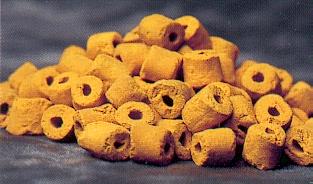
Typical vanadaium pentoxide catalyst contain the following substances:
Causes eye, skin and respiratory tract irritation
Repeated and prolonged inhalation can cause delayed lung damage
Suspected cancer hazard
Contains quartz which may cause cancer
Precautionary Measures When Handling
Avoid contact with eyes, skin and clothing
Avoid breathing dust
Keep containers closed
Use with adequate ventilation
Wash thoroughly after handling
| Eye Contact | Immediately flush with lots of water for at least 15 minutes. Obtain medical attention immediately. |
| Skin Contact | Immediately flush with lots of water. Remove contaminated clothing. Obtain medial attention immediately. Used clothing should be disposed of properly or washed before reusing. |
| Inhalation | Remove to fresh air. If not breathing give artifical respiration. Give oxygen if breathing is difficult. Obtain medical attention immediately. |
| Spill or Leak | Shovel the bulk of
the material into a steel drum.
Sweep up the remaining material.
Wash down the area of the spill.
Wash water should be contained and disposed of properly. |
| Eye Protection | Wear chemical goggles and have an eye wash station available. |
| Skin Protection | Wear chemical resistant gloves and clothing to protect exposed skin. Disposable clothing is preferable to cleaning and reusing clothing. |
| Respiratory Protection | Avoid breathing dust. Use NIOSH/MSHA approved respiratory protection equipment. |
| Ventilation | Provide natural or mechanical ventilation to control exposure levels. |
Waste or used catalyst should be disposed of in an approved chemical landfill in accordance with all applicable local, provincial, state and federal laws and regulations. Metal reclaimers are available to recover vanadium pentoxide V2O5 from waste material.