|
||
| Sulphuric Acid on the WebTM | Technical Manual | DKL Engineering, Inc. |
Knowledge for the
Sulphuric Acid Industry

Sulphuric Acid on the Web
Introduction
General
Equipment Suppliers
Contractor
Instrumentation
Industry News
Maintenance
Acid
Traders
Organizations
Fabricators
Conferences
Used
Plants
Intellectual
Propoerty
Acid
Plant Database
Market
Information
Library
Technical Manual
Introduction
General
Definitions
Instrumentation
Plant Safety
Metallurgial
Processes
Metallurgical
Sulphur Burning
Acid Regeneration
Lead Chamber
Technology
Gas Cleaning
Contact
Strong Acid
Acid Storage
Loading/Unloading
Transportation
Sulphur
Systems
Liquid SO2
Boiler Feed Water
Steam Systems
Cooling Water
Effluent Treatment
Utilities
Construction
Maintenance
Inspection
Analytical Procedures
Materials of Construction
Corrosion
Properties
Vendor Data
DKL Engineering, Inc.
Handbook of Sulphuric Acid Manufacturing
Order
Form
Preface
Contents
Feedback
Sulphuric Acid
Decolourization
Order Form
Preface
Table of Contents
Process Engineering Data Sheets - PEDS
Order
Form
Table of Contents
Introduction
Bibliography of Sulphuric Acid Technology
Order Form
Preface
Contents


Materials of Construction -
FRP - Nexus® Veil
December 18, 2001
|
Introduction Characteristics Chemical Resistance |
Associated Links |
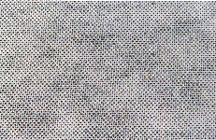
Nexus® surfacing fabrics are non-woven formed fabrics produced from Dacron 106 homopolymer (polyester). These fabrics are formed by a unique patented process of fibre entanglement that employs no binders.The relatively high fibre elongation of Nexus® fabrics makes them particularly compatible with corrosion resistant laminating resins.
Nexus® surfacing fabrics can be used to advantage as the primary reinforcement for the resin-rich inner surface of filament wound pipe and tank, as well as for contact molded FRP structures. These fabrics are also recommended for both interior and exterior surfaces of protruded product for excellent impact, corrosion, weather and UV-resistance.
Nexus® polyester fibre surfacing fabrics are formed by a unique binder-free process of hydraulic fibre entanglement that results in a web with both vertical and horizontal fibre orientation. This ability to orient fibre vertically as well as horizontally improves the interlaminar bond strength of surface layers reinforced with Nexus®.
The polyester fibre employed in Nexus® fabric is 1.5 denier Dacron type 106 homopolymer staple. Fibre elongation at break is 25%. Type 106 staple contains small amounts of titanium dioxide and an optical brightner to improve fabric "whiteness". Neither additive adversely effects corrosion resistance.
Nexus® surfacing fabrics conform readily to contoured surfaces and are quickly wet by polyester, vinyl ester and epoxy laminating resins. The dry and wet tensile strength of these fabrics is superior to both "C" glass mat and commonly used adhesive bonded polyester and modacrylic fiber surfacing veils.
Nexus® surfacing fabrics have:
In general, Dacron homopolymer fibre classes are more chemical resistant than copolymer classes.