|
||
| Sulphuric Acid on the WebTM | Technical Manual | DKL Engineering, Inc. |
Knowledge for the
Sulphuric Acid Industry

Sulphuric Acid on the Web
Introduction
General
Equipment Suppliers
Contractor
Instrumentation
Industry News
Maintenance
Acid
Traders
Organizations
Fabricators
Conferences
Used
Plants
Intellectual
Propoerty
Acid
Plant Database
Market
Information
Library
Technical Manual
Introduction
General
Definitions
Instrumentation
Plant Safety
Metallurgial
Processes
Metallurgical
Sulphur Burning
Acid Regeneration
Lead Chamber
Technology
Gas Cleaning
Contact
Strong Acid
Acid Storage
Loading/Unloading
Transportation
Sulphur
Systems
Liquid SO2
Boiler Feed Water
Steam Systems
Cooling Water
Effluent Treatment
Utilities
Construction
Maintenance
Inspection
Analytical Procedures
Materials of Construction
Corrosion
Properties
Vendor Data
DKL Engineering, Inc.
Handbook of Sulphuric Acid Manufacturing
Order
Form
Preface
Contents
Feedback
Sulphuric Acid
Decolourization
Order Form
Preface
Table of Contents
Process Engineering Data Sheets - PEDS
Order
Form
Table of Contents
Introduction
Bibliography of Sulphuric Acid Technology
Order Form
Preface
Contents

Gas Cleaning System - Weak Acid Cooling
September 7, 2001
|
Introduction Plates Gaskets Process Limitations Temperature Control Leakage Control Extending the Life of Plates and Gaskets |
Associated Links |
Plate heat exchangers are typically used for the majority of all weak acid cooling duties.
The original idea for a plate and frame heat exchanger was patented in the latter half of the 1800’s but the first commercially successful design was introduced in 1923. In the 1930’s plates pressed in thin gauge stainless steel were introduced.
A plate and frame heat exchanger consists of a frame in which closely spaced metal plates are clamped between a head and follower plate. Fluid enters and leaves the plate pack through ports located in the corner of the plates. Gaskets are located around the ports and the plate edges which prevent the mixing of fluids and the escape of liquid out of the plate pack.
It is very important that the material selected for a particular application be highly corrosion resistant to the process fluid being handled. A corrosion rate that is acceptable for a vessel which has relatively thick wall would not be acceptable for a plate heat exchanger simply because the plate thickness is so much smaller.
Typical materials used in sulphuric acid plant applications are:
316L SS Weak acid applications
904L SS Weak acid applications
254 SMO Weak acid applications
Hastelloy® G-30 Weak acid applications
Alloy C-276 Weak/strong acid applications
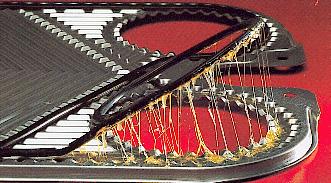
The selection of the proper gasket material must take into account the fluids being handled, operating temperature, and the sealing properties of the material itself. Typical materials used in sulphuric acid plant applications are:
EPDM Weak acid cooling applications
Viton Weak/strong acid cooling applications
The plate heat exchanger should never be opened unless absolutely necessary as damage to the gasket may occur.
After a few years of operation, the gasket at the hottest points may slowly lose their elasticity and the glue will no longer retain its full bonding strength. This can lead to a section of the gasket loosening from the plate when the unit is open. In some cases the gasket can be simply be glued back in place but in more severe cases the entire gasket may need to be replaced.
The normal life of Viton gaskets is about 5 to 6 years in normal service for strong acid cooling. As a general rule of thumb, the life of the gasket will be reduced by half for every 10°C above 90°C that the unit operates at for prolonged periods of time.
Plate heat exchangers constructed of Alloy C-276 plates and Viton gaskets impose certain limitations on the process in order to achieve reliable and extended operation of the heat exchangers. The maximum temperature into a plate heat exchanger is a function of acid concentration. Exceed the maximum temperature will result in higher corrosion rates and reduced life of the plate pack.
Concentration Maximum Temperature
98% 90°C (200°F)
92% 70°C (160°F)
70% 60°C (120°F)
The acid concentration should never be allowed to exceed 100% H2SO4 as the free SO3 will attack the gasket material causing it to swell.
The maximum permitted acid velocity for 98% H2SO4 is 3 m/s (9.8 ft/s) due to the risk of increased erosion and corrosion.
The cooling water outlet temperature should exceed 40°C (104°F). Carbonate fouling increases significantly at temperatures above 40°C.
Bypassing fluid on the process side of the heat exchanger should always be used to control the process temperature. Water flow should never be throttled or reduce as increased fouling will occur on the cooling water side.
The inability to maintain the required process temperature will generally indicate that the cooling water side of the heat exchanger is fouled. This condition occurs when the acid side bypass is fully closed.
The temperature difference between the cooling water inlet and outlet will indicate the thermal performance of the unit since the cooling water flow through the exchanger should be constant. Thus, higher cooling water outlet temperature will indicate a higher heat load on the unit.
Every effort should be made to ensure that the process side operating pressure is higher than the cooling water side of the exchanger. If a leak occurs in the unit, acid will leak into the cooling water and can be readily detected whereas a leak of cooling water into the acid is more difficult to detect.
An instrument measuring pH or conductivity of the cooling water leaving the exchanger is the simplest and method of detecting a leak. If a leak is suspected the heat exchanger should be taken out of service, inspected and the necessary repairs performed.
Gasket leaks will always appear underneath the heat exchanger. Tightening the plate pack by a few millimetres can eliminate some leaks. If this does not work the unit will need to be taken out of service and the gaskets inspected.
A plate heat exchanger should always be equipped with a plate pack cover which will prevent external leaks from spraying out and direct the liquid down. A drip tray is often provided underneath the exchanger to collect any liquid and direct it to a safe location. This is particularly necessary if the heat exchangers are located above grade on a platform.
The most severe conditions in a plate heat exchanger are at the acid inlet. Corrosion rates cane expected to be highest in this region. The temperature will decrease as the acid is cooled in the exchanger so the corrosion rate will be less at the acid outlet. The symmetry of the heat exchanger plates allows for the plates to be rotated so that the acid inlet end becomes the acid outlet and vice versa. The effect of doing this is to extend the life of the unit by exposing the less corroded end of the plate to the more aggressive conditions.
The exact method of reversing the plates will depend on the geometry of the plates and their arrangement in the frame. Consult the manufacturer’s instructions for details.

