|
||
| Sulphuric Acid on the WebTM | Technical Manual | DKL Engineering, Inc. |
Knowledge for the
Sulphuric Acid Industry

Sulphuric Acid on the Web
Introduction
General
Equipment Suppliers
Contractor
Instrumentation
Industry News
Maintenance
Acid
Traders
Organizations
Fabricators
Conferences
Used
Plants
Intellectual
Propoerty
Acid
Plant Database
Market
Information
Library
Technical Manual
Introduction
General
Definitions
Instrumentation
Plant Safety
Metallurgial
Processes
Metallurgical
Sulphur Burning
Acid Regeneration
Lead Chamber
Technology
Gas Cleaning
Contact
Strong Acid
Acid Storage
Loading/Unloading
Transportation
Sulphur
Systems
Liquid SO2
Boiler Feed Water
Steam Systems
Cooling Water
Effluent Treatment
Utilities
Construction
Maintenance
Inspection
Analytical Procedures
Materials of Construction
Corrosion
Properties
Vendor Data
DKL Engineering, Inc.
Handbook of Sulphuric Acid Manufacturing
Order
Form
Preface
Contents
Feedback
Sulphuric Acid
Decolourization
Order Form
Preface
Table of Contents
Process Engineering Data Sheets - PEDS
Order
Form
Table of Contents
Introduction
Bibliography of Sulphuric Acid Technology
Order Form
Preface
Contents


Acid Plant Database August 29, 2021
| Owner |
Office Chérifien des Phosphates Group (OCP) |
|
||||
| Location |
Jorf Lasfar |
|||||
| Background |
1920 - OCP created 1975 - OCP Group created |
|||||
| Website | www.ocpgroup.ma | |||||
| Plant |
Maroc Phosphore III-IV |
|||||
| Plant 1 | Plant 2 | Plant 3 | Plant 4 | Plant 5 | Plant 6 | |
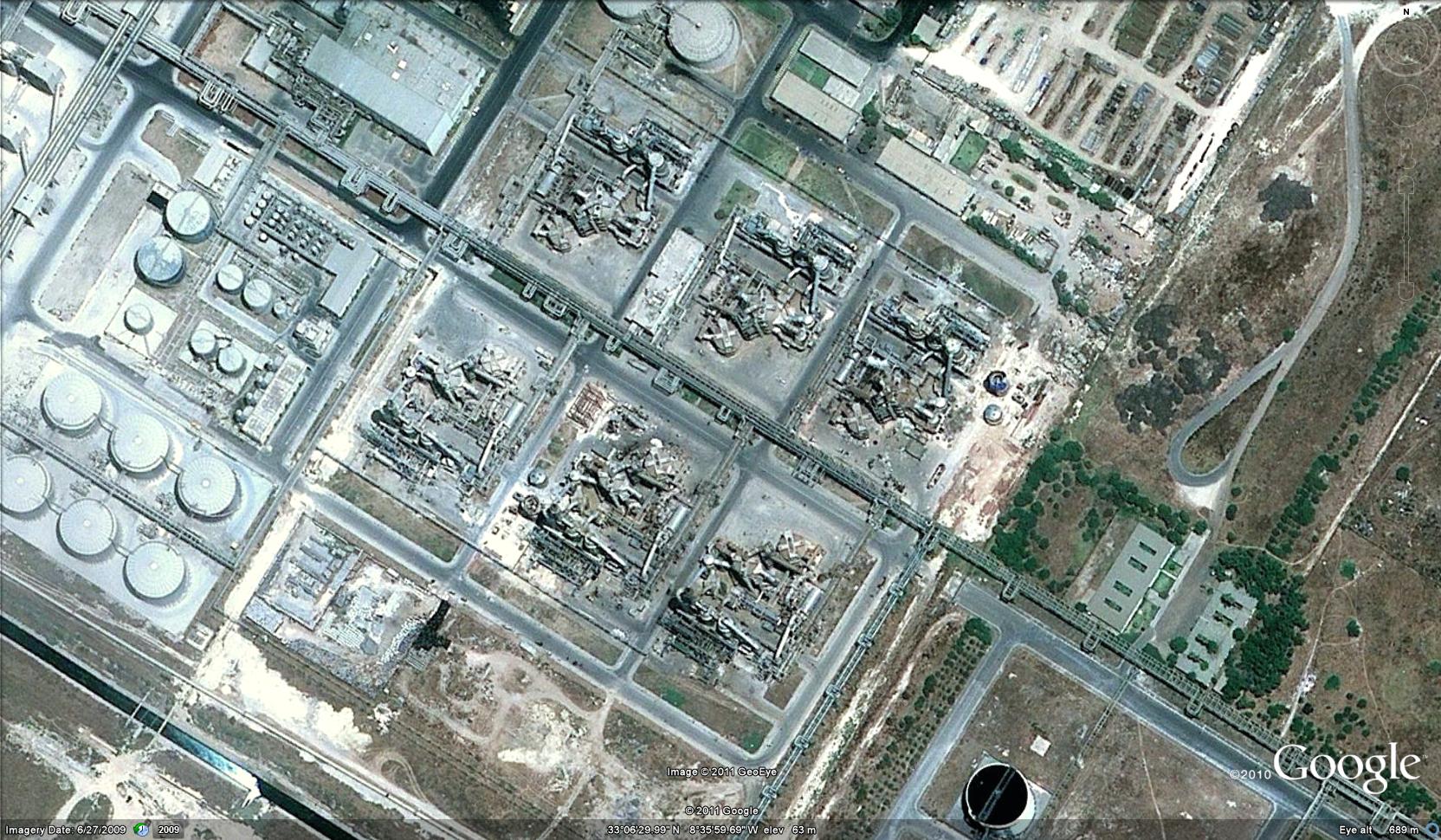
| Coordinates* | 33° 6' 30" N, 8° 36' 5" W | 33° 6' 29" N, 8° 36' 2" W | 33° 6' 27" N, 8° 35' 59" W | 33° 6' 34" N, 8° 36' 2" W | 33° 6' 32" N, 8° 35' 59" W | 33° 6' 31" N, 8° 35' 56" W |
| Type of Plant | Sulphur Burning | Sulphur Burning | Sulphur Burning | Sulphur Burning | Sulphur Burning | Sulphur Burning |
| Gas Source | Elemental Sulphur | Elemental Sulphur | Elemental Sulphur | Elemental Sulphur | Elemental Sulphur | Elemental Sulphur |
| Plant Capacity |
2650 STPD |
2650 STPD |
2650 STPD |
2650 STPD |
2650 STPD |
2650 STPD |
| SA/DA | 3/1 DA | 3/1 DA | 3/1 DA | 3/1 DA | 3/1 DA | 3/1 DA |
| Status | Operating | Operating | Operating | Operating | Operating | Operating |
| Year Built | 1986 | 1986 | 1986 | 1986 | 1986 | 1986 |
| Technology | MECS | MECS | MECS | MECS | MECS | MECS |
| Contractor | - | - | - | - | - | - |
| Remarks | - | SULFACID (2014) | SULFACID (2016) | - | - | - |
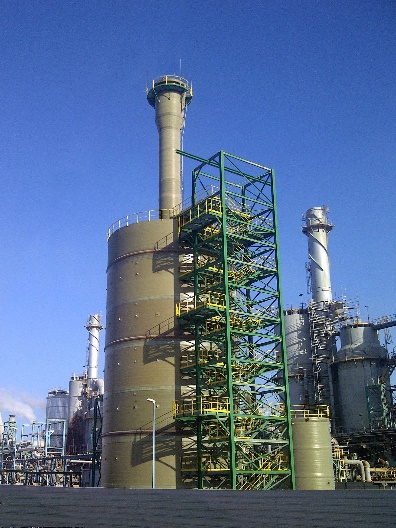
CPPE’s first
contract with OCP Group was in 2012, for the design, engineering and
construction of a SULFACID® gas treatment plant in Jorf Lasfar, Morroco. In
this process SO2 from the tail gas of the sulphuric acid production process
iscatalytically transformed into diluted sulfuric acid. The sulfuric acid
produced is recycled within the installation to produce 98.5% sulfuric acid.
The process operates continuously, with input of process water only. No
chemicals or steam are required and there are no byproducts requiring
disposal. Due to space restraints, the SULFACID process is constructed in a
single vertical reactor tower, with central stack, the first of its kind.
This technology allows for eliminating polluting SO2 from the atmosphere in
the order of 10,800 t/y.After the successful completion of the first
SULFACID® installation in 2014, OCP signed a new contract with CPPE to
design, engineer and supervise the construction of another, identical
SULFACID® installation which was completed in 2016.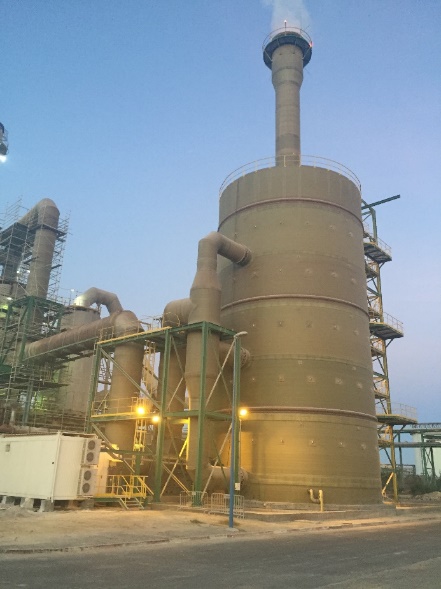
 |
||||||
| Pictures |
 |
|||||
| General |
Located on the Atlantic coast, 20 km to the South-West of El Jadida, the
Jorf Lasfar industrial complex started production in 1986. This new unit
allowed OCP Group to double its phosphate processing capacity. The site was
selected for its multiple advantages: nearness of the mining areas,
availability of a deep water port, access to substantial water reserves and
availability of land for future extensions. The Jorf Lasfar complex is composed of three entities, including the Maroc Phosphore III-IV unit which was created in 1986. With the construction in 1997 of the Emaphos plant, in partnership with Prayon (Belgium) and CFB (Germany), OCP Group entered a new era of diversification of its finished products by producing a high value added acid, i.e. purified phosphoric acid. Two years later, the commissioning of Imacid, a partnership with Indian Birla Group, enabled it to increase its phosphoric acid production capacity by 25% on the Jorf Lasfar site. Maroc Phosphore III-IV has an annual production capacity of 1.4 million tons P2O5 of phosphoric acid, 850,000 tons of Di-Ammonium Phosphate (DAP) and 850,000 tons equivalent DAP of other fertilizers. The sulphuric acid plant has 6 production units of 2,650 tons per day. The process used is double absorption Monsanto. The phosphoric acid plant is composed of 8 phosphate rock crushing units, 8 lines of 29% P2O5 phosphoric acid, 20 concentration units, 8 clarification units, 4 54% P2O5 acid filtration units, as well as a pre-treatment unit. Manufacturing is made according to the French Rhone-Poulenc process. The fertilizer plant includes 4 DAP production units, of which 2 can also produce TSP, granulated MAP and NPK (for the local market). The basic process used is AZF double tubular reactor for DAP and AZF agitated tank with slurry pumping for TSP. This process was replaced by the pre-neutralizer and tubular reactor Jacobs process as part of the revamping programme. |
|||||
| References | - | |||||
| News | - | |||||
MTPD - Metric Tonne per Day
STPD - Short Ton per Day
MTPA - Metric Tonne per Annum STPA - Short Ton per
Annum
SA - Single Absorption
DA - Double Absorption
* Coordinates can be used to
locate plant on Google Earth


