|
||
| Sulphuric Acid on the WebTM | Technical Manual | DKL Engineering, Inc. |
Knowledge for the
Sulphuric Acid Industry

Sulphuric Acid on the Web
Introduction
General
Equipment Suppliers
Contractor
Instrumentation
Industry News
Maintenance
Acid
Traders
Organizations
Fabricators
Conferences
Used
Plants
Intellectual
Propoerty
Acid
Plant Database
Market
Information
Library
Technical Manual
Introduction
General
Definitions
Instrumentation
Plant Safety
Metallurgial
Processes
Metallurgical
Sulphur Burning
Acid Regeneration
Lead Chamber
Technology
Gas Cleaning
Contact
Strong Acid
Acid Storage
Loading/Unloading
Transportation
Sulphur
Systems
Liquid SO2
Boiler Feed Water
Steam Systems
Cooling Water
Effluent Treatment
Utilities
Construction
Maintenance
Inspection
Analytical Procedures
Materials of Construction
Corrosion
Properties
Vendor Data
DKL Engineering, Inc.
Handbook of Sulphuric Acid Manufacturing
Order
Form
Preface
Contents
Feedback
Sulphuric Acid
Decolourization
Order Form
Preface
Table of Contents
Process Engineering Data Sheets - PEDS
Order
Form
Table of Contents
Introduction
Bibliography of Sulphuric Acid Technology
Order Form
Preface
Contents


Acid Plant Database September 19, 2015
| Owner | KCM S.A. |
|
| Location | Assenovgradsko shosse 4009 Plovdiv, Bulgaria |
|
| Background |
Formerly - Integrated Lead and Zinc Works - Dimitar Blagoev Combine
1958 - Decree No. P-1340 of the Council of Ministers dated August 28, 1958
locates the new plant on a 200 acre site 12 kilometers from the town of
Plovidv. |
|
| Website | www.kcm.bg | |
| Plant | Zinc Roaster Acid Plant | Lead Acid Plant |
| Coordinates | 42° 3' 35" N, 24° 48' 39" E | 42° 3' 41" N, 24° 48' 48" E (site) |
| Type of Plant | Metallurgical | Metallurgical Wet Gas Sulphuric Acid Plant |
| Gas Source | Zinc Roaster | Lead Concentrate,
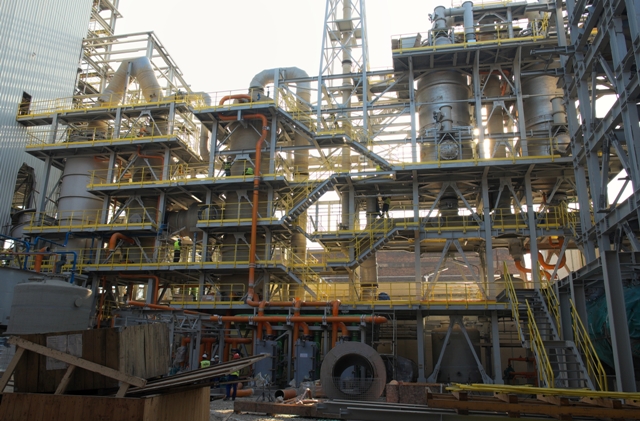
battery scrap, lead residue (Ausmelt Furnace) 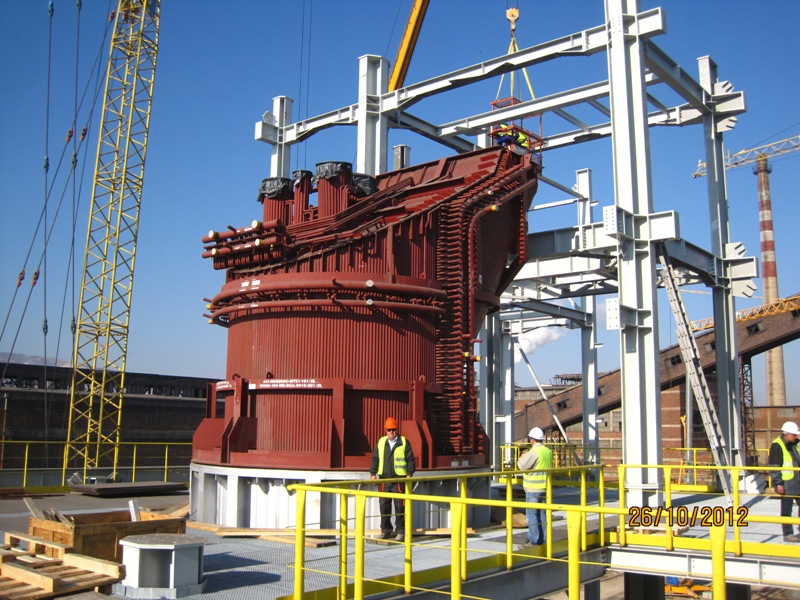 |
| Plant Capacity | 118,000 t/y | - |
| SA/DA | DA Emissions: < 500 mg/Nm3 SO2 |
SA |
| Status | Operating | Operating |
| Year Built | - | - |
| Technology | Outotec | Gas Cleaning: GEA
Bischoff Acid Plant: MECS-KVT |
| Contractor | - | - |
| Remarks | - | Ausmelt
furnace replaces a sinter plant and blast furnace Tail gas scrubber (Dynawave) |
| Site had a unsteady state converter sulphuric acid plant designed and commissioned in collaboration with the Institute of Catalysis of the Siberian Section of the Russian Academy of Sciences, the Institute of Chemical Engineering of the Bulgarian Academy of Sciences and the Integrated Lead and Zinc Works in Plovdiv, Bulgaria. | ||
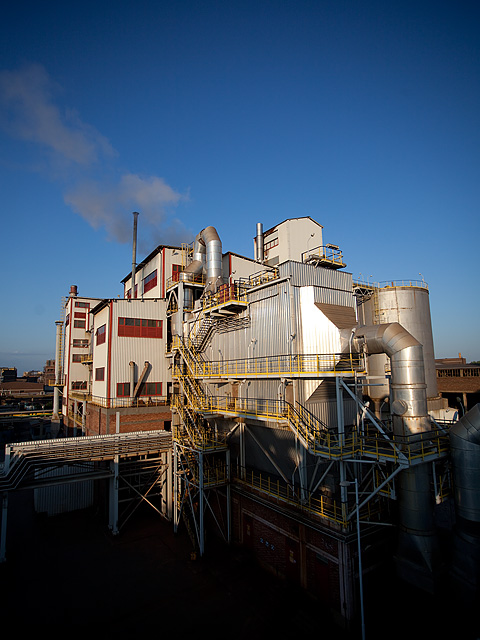
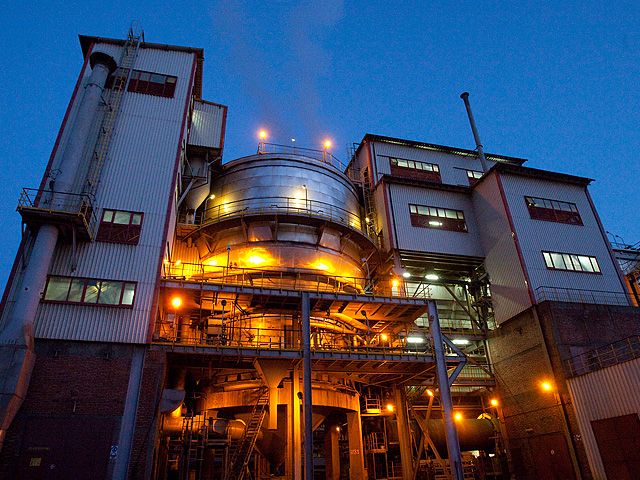
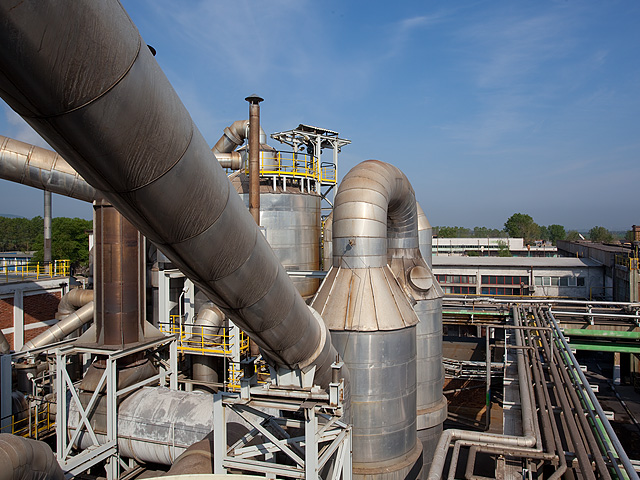
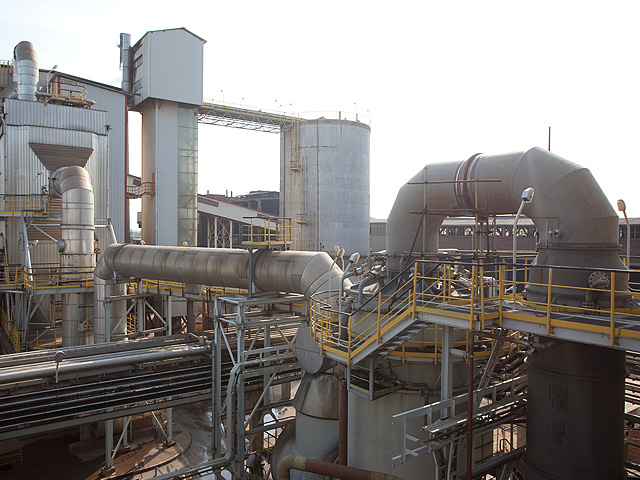
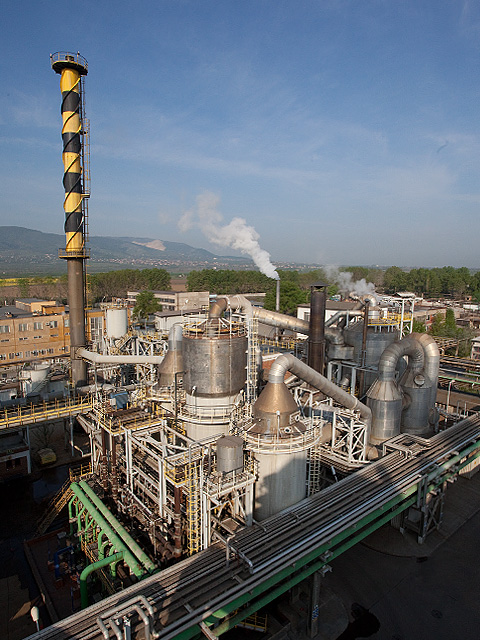
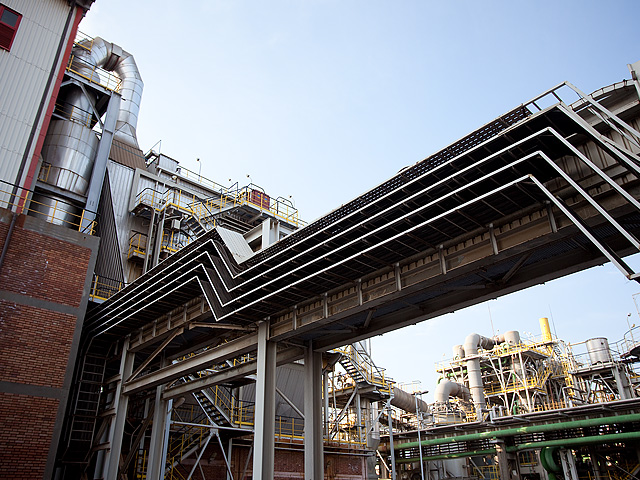
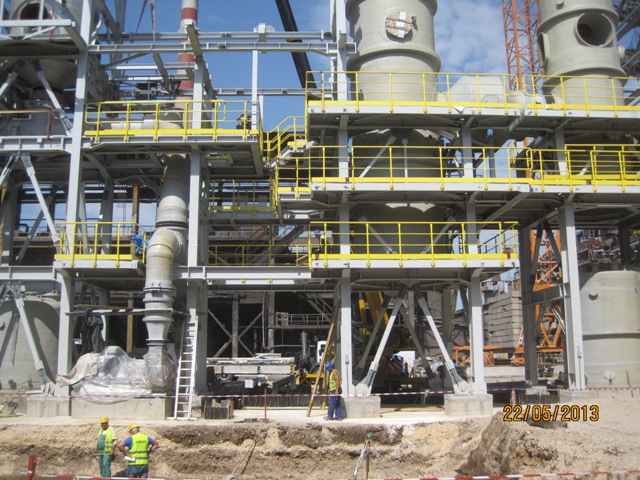
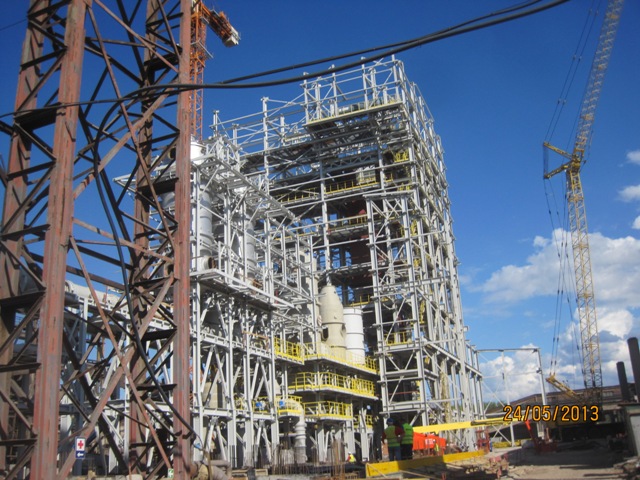
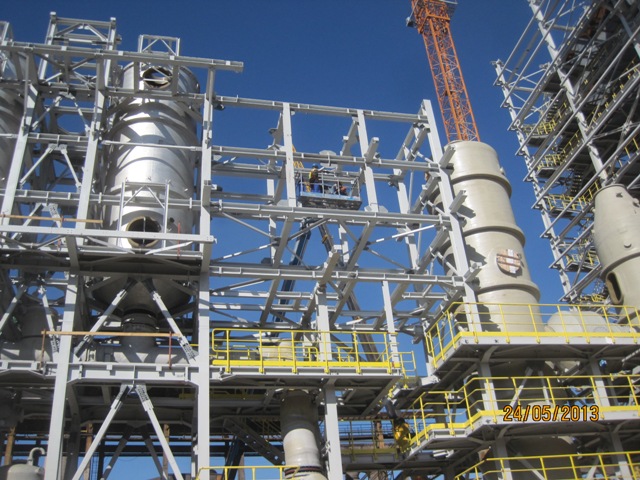
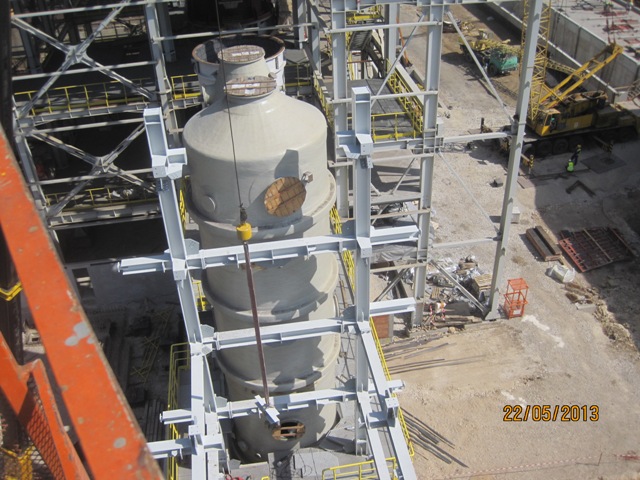
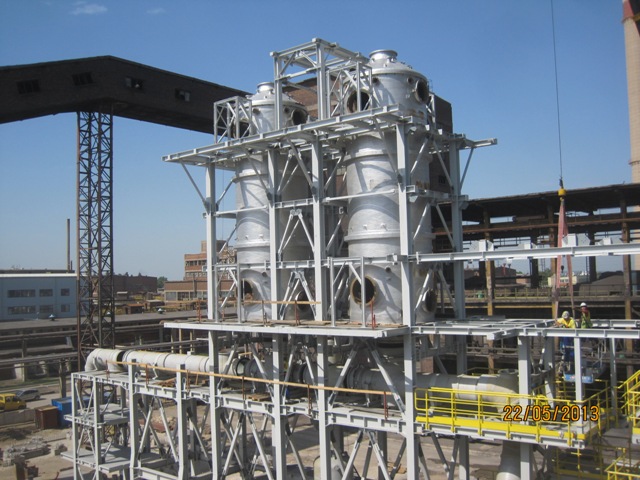
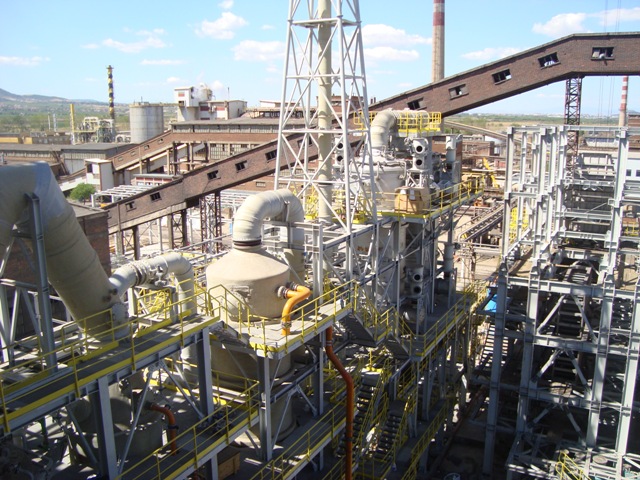
| Pictures | 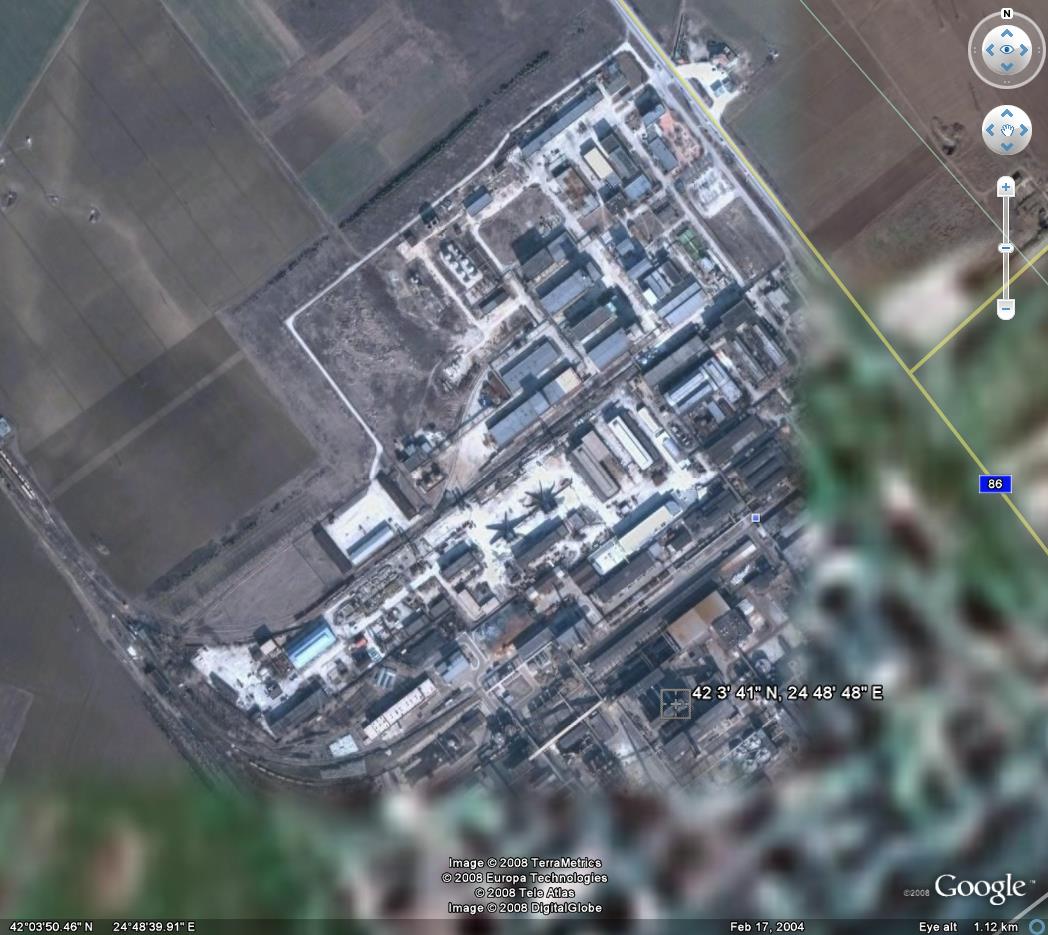 |
|
 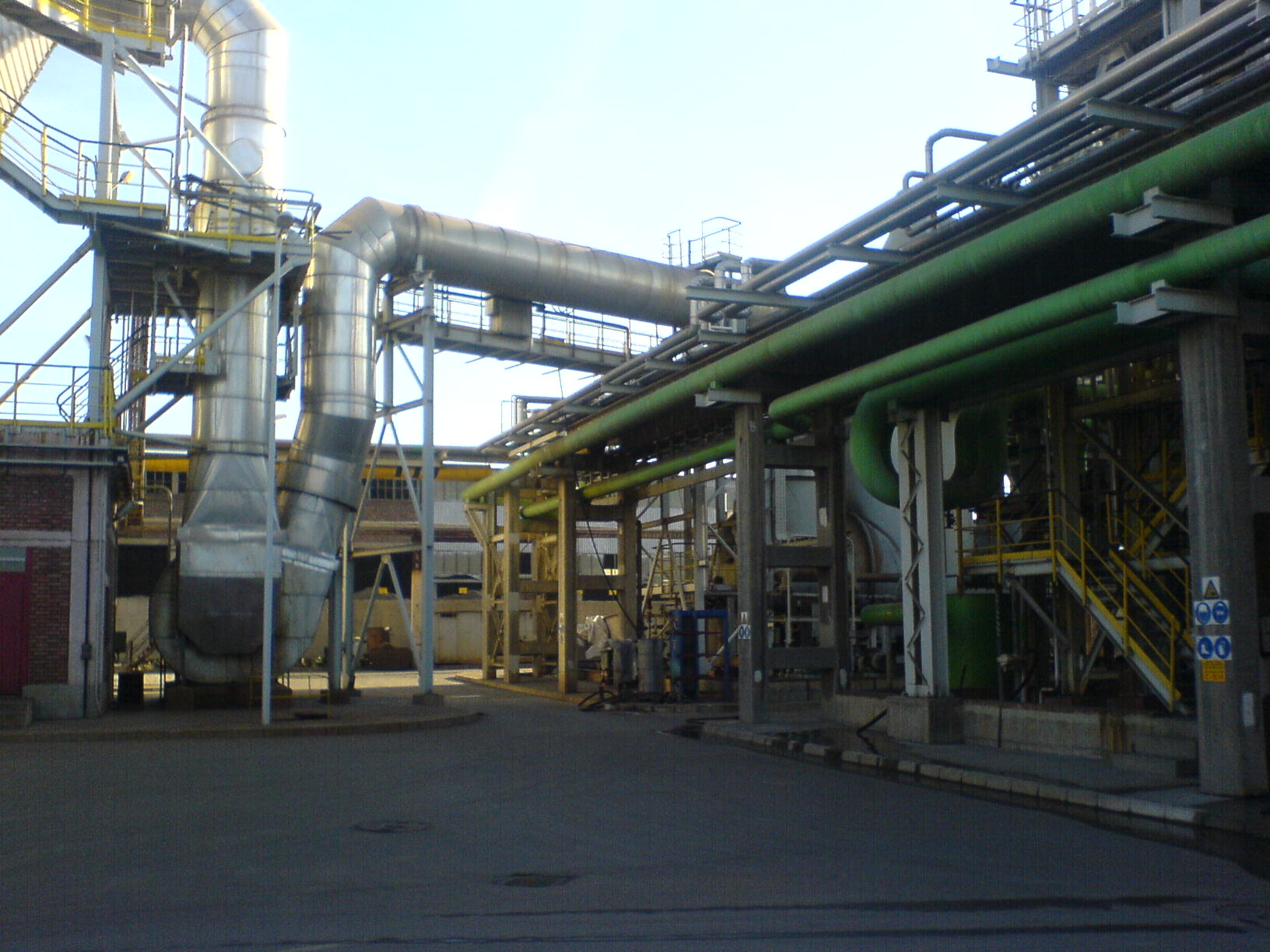 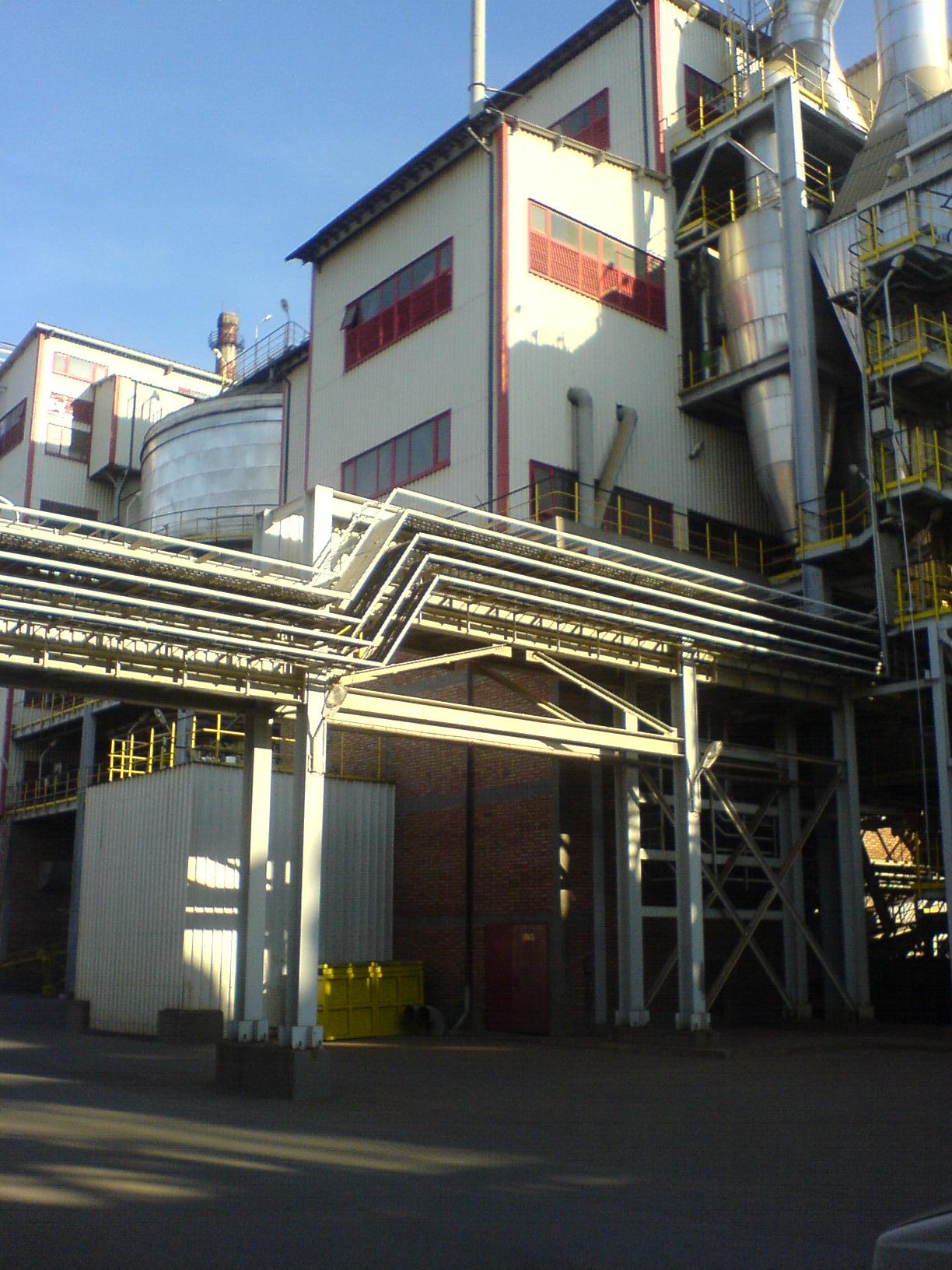
|
|
|
| General | The Non-ferrous Metals Smelter (KCM SA) is situated on the 900 decare site between Plovdiv and Assenovgrad. During those 40 years of development we accumulated enough experience and knowledge in the field of the non-ferrous metallurgy, a fact which deservedly assigns us the position of the biggest producer of non-ferrous metals and lead and zinc alloys in the Central and Eastern Europe. Our efforts are also directed to the search of new possibilities for production development, diversification of the products list and sale of precious metals and special application metals. By the end of the fifties in connection with the Programme of the Council of Ministers of People’s Republic of Bulgaria for accelerated industrialization and development of mine output, a resolution is taken to expand the metallurgical capacities for non-ferrous metals production. By a Decree of the Council of Ministers a site of 200 acres, between the towns of Plovdiv and Assenovgrad, is fixed for the construction of the new lead and zinc concentrates treatment plant. On 9 May, 1959 in the presence of specialists from “Giprozvetmet” Company – the Main Designer, the first sod was turned of the lead and zinc production plant, which was known till the end of the eighties as the Combined Works for Non-ferrous Metals “Dimitar Blagoev”. The inauguration of the Combined Works was on 24 December 1961; the day before the zinc plant was started up. The first lead metal blocks were cast in the end of 1963. Simultaneously with the construction of new production capacities (Powder Metallurgy Unit in 1970 and Precious Metals Production Unit or 330 Unit in 1985) also an expansion of the main production units was carried out. In November 1991 the Combined Works for Non-ferrous Metals Production “Dimitar Blagoev” was transferred into a Joint Stock Company with 100% state capital. That year marked a new approach in the company’s policy – settling of heavy ecological problems, active investment and development of ecologically friendly production. The development of the new ecological strategy was carried out on the basis of economical stability and sustainable development, thus ensuring the effective environmental preservation. The large-scale investment programme entered a new stage with the start of the Industrial Pollution Improvement Project at KCM SA, Plovdiv, which was financed by the Japanese Government. In the summer of 2000 the privatization procedure was completed. On July 25th the Privatization Agency finalized the deal. A week later, on 2 August, 80% of the capital owned by KCM SA was transferred to the private company KCM 2000 SA. The managing team of KCM SA, Plovdiv is an emblematic example for a privatization, conducted through a Workers’ Managerial Company at a high professional level. The radical change of the ownership created concrete conditions for development and realization of programmes and projects, necessary to ensure the best possible conditions for the development and strengthening the position of the company in the global non-ferrous metallurgy. |
|
| Referemces | www.irconltd.com | |
| News | June 27, 2013
- As we refered to you before "Ircon" was tasked to develop the technical
and detailed design stages for TSL furnace plant, Bullion Handling System,
Wet Gas Cleaning Plant, Sulphuric Acid Plant, Feed Handling System and
projects of landscaping, water and sewerage and roads on the site as well
fire safety and health & safety. The project is very modern and
innovative, not only within our country but also worldwide. Here you can see
implemented the latest technologies in the field of metallurgy. The Basic
design is developed by Worley Parsons Adelaida. In the basis of the whole
process is the TSL (Top Submerged Lance) furnace. It is produced in
Bulgaria, designed by the world leader in this field - Outotec. By using the
experience and the "know-how" of the Australian company in the NLP are
supplied and implemented a number of other facilities. Following this
innovative line KCM has set on another world leader in its design - namely,
Foster Wheeler for the design and delivery of waste heat boiler and all
piping connected with it. Conditioned by the technological features also
design of wet gas cleaning is needed, and its equipment is supplied by the
world-famous German company GEA Bischoff, and the technological design of
the facilities for sulfuric acid, and the supply of the equipment is
performed by the Austrian company KVT (part of MECS Sulfox). In the
field of the preparation of raw materials are combined equipment suppliers
from Bulgaria (Simex and SAT for conveyors, table feeders, hoppers) and
foreign ones like Diemme Filtration (filter press), Selip.
Technological project for the Lead casting has been designed by one of the
leaders in this field - the Italian company Engitec - with extensive
experience in the field. Ircon Ltd. as a partner of KCM’s NLP project
aims to bring together and materialize the ideas of each of the foreign
suppliers, to implement the project as soon as possible and be
technologically driven. Our site engineer everyday coordinate and synthesize
the design solution and takes responsibility for QQ and time schedule
keeping. For Ircon’s team it is a real pleasure to participate in this
project and to cooperate with companies of that rank. We hope in future to
implement many more similar projects contributing to the development of the
industry in our country and we wish the Bulgarian participation in them is
growing. We wish our client in the face of KCM a successful completion
of the project and implementation of all plants in operation in the near
future! September 6, 2010 - KCM, Bulgaria's largest lead and zinc smelter, will be idled until it cleans up production in line with its integrated pollution prevention and control permit if it spews gas more than twice per month starting September. KCM, Bulgaria's largest lead and zinc smelter, will be idled until it cleans up production in line with its integrated pollution prevention and control permit if it spews gas more than twice per month starting September. This was announced in a letter by Bulgaria’s deputy environment minister Evdokia Maneva sent to Kardjali governor Ivanka Taushanova and the KCM management, state news agency BTA reported on Thursday. “If they allow more than two instances of pollution, we’re going to shut them down and this persistent issue will be resolved through their planned new lead installation,” Maneva told Dnevnik. She added that although it has deployed sulphur dioxide removal equipment at the site, the smelter has exceeded noxious emissions allowances more than three times per month so far in 2010. The cap on annual pollution levels at a single point is laid down in the European Commission’s Large Combustion Plant Directive. A failure to comply with the restriction could lead to another infringement procedure against Bulgaria, according to Maneva. KCM could not be reached for comment yesterday. Meanwhile, Maneva said she does not expect the Commission will give the green light for a requested extension of the lifetime of electricity and briquette plant Brikel until sulphur dioxide removal equipment is installed at the site. “We’ve used up all our arguments to the Commission, including the jobs Brikel provides, and we cannot offer a sensible answer as to why we continue its operations,” she said. September 17, 2008 - Ausmelt Limited (AET) has signed a Licence Agreement with KCM SA for a new Ausmelt technology furnace at its lead production facilities at Plovdiv in Bulgaria. Ausmelt and KCM SA have also agreed the main terms and conditions applicable for the subsequent detail engineering, core equipment supply and commissioning services. Ausmelt has signed a sub-contractor agreement for the basic engineering stage of the project with WorleyParsons Services Pty Ltd. KCM SA is the leading producer of zinc and lead in Bulgaria and is seeking to modernise and expand its lead smelting operations. The new Ausmelt furnace will recover lead bullion from a mixture of lead concentrates, battery scrap and lead residues and will replace the existing sinter plant and blast furnace. Ausmelt technology is being implemented to meet stringent EU environmental standards and is expected to deliver operating cost savings. The capacity of the facility will be sufficient to allow for the production of approximately 65,000 tonnes per year of refined lead. |
|
MTPD - Metric Tonne per Day
STPD - Short Ton per Day
MTPA - Metric Tonne per Annum STPA - Short Ton per
Annum
SA - Single Absorption
DA - Double Absorption
* Coordinates can be used to
locate plant on Google Earth