|
||
| Sulphuric Acid on the WebTM | Technical Manual | DKL Engineering, Inc. |
Knowledge for the
Sulphuric Acid Industry

Sulphuric Acid on the Web
Introduction
General
Equipment Suppliers
Contractor
Instrumentation
Industry News
Maintenance
Acid
Traders
Organizations
Fabricators
Conferences
Used
Plants
Intellectual
Propoerty
Acid
Plant Database
Market
Information
Library
Technical Manual
Introduction
General
Definitions
Instrumentation
Plant Safety
Metallurgial
Processes
Metallurgical
Sulphur Burning
Acid Regeneration
Lead Chamber
Technology
Gas Cleaning
Contact
Strong Acid
Acid Storage
Loading/Unloading
Transportation
Sulphur
Systems
Liquid SO2
Boiler Feed Water
Steam Systems
Cooling Water
Effluent Treatment
Utilities
Construction
Maintenance
Inspection
Analytical Procedures
Materials of Construction
Corrosion
Properties
Vendor Data
DKL Engineering, Inc.
Handbook of Sulphuric Acid Manufacturing
Order
Form
Preface
Contents
Feedback
Sulphuric Acid
Decolourization
Order Form
Preface
Table of Contents
Process Engineering Data Sheets - PEDS
Order
Form
Table of Contents
Introduction
Bibliography of Sulphuric Acid Technology
Order Form
Preface
Contents


Acid Plant Database August 19, 2026
| Owner | Lotus Resources Limited |
|
| Location |
Northern Malawi 52 km west of Karonga |
|
| Background |
Wholly owned subsidiary of Paladin Energy Limited
 Paladin (Africa) Limited www.paladinenergy.com.au Ownership: 85% Paladin 15% Malawi Government 1998 – Paladin acquires the project from Balmain Resources Pty Ltd. 2008 – Open pit mining begins 2009 – Mine officially opened 2020 - Sold to Lily Resources (20%) and Lotus Resources (65%). Malawi Government (15%) 2021 - Lotus acquires Lily Resources sharea |
|
| Website | www.lotusresources.com.au | |
| Plant | Kayelekera Uranium Mine | |
| Coordinates* | 9° 59' 41" S, 33° 42' 0" E | |
| Type of Plant | Sulphur Burning | |
| Gas Source | Elemental Sulphur | |
| Plant Capacity | 200 MTPD | |
| SA/DA | DA | |
| Emissions | - | |
| Status |
2014 - Care and maintenance due to low uranium prices 2025 - Resume operation |
|
| Year Built | 2009 | |
| Technology | Outotec | |
| Contractor | E+PC Engineering & Projects Company | |
| Remarks | Plant was supplied skid mounted | |
| Pictures | 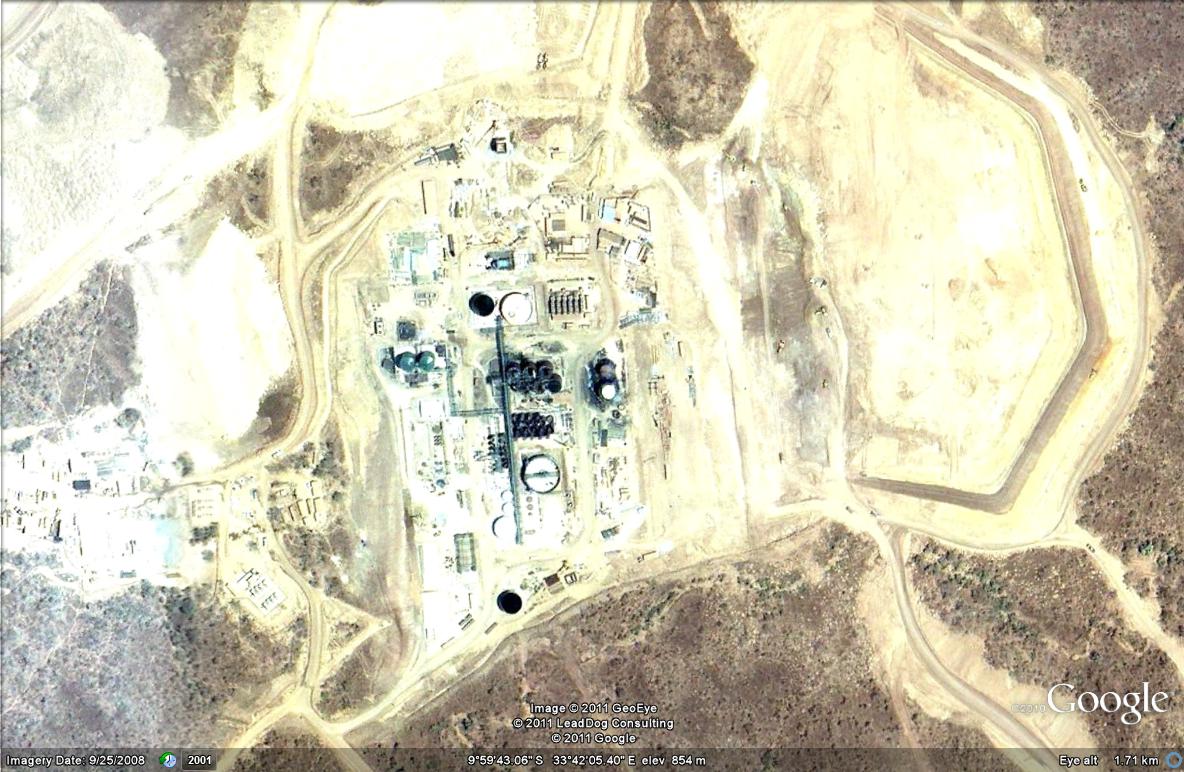 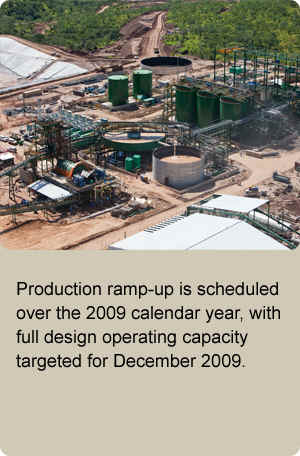 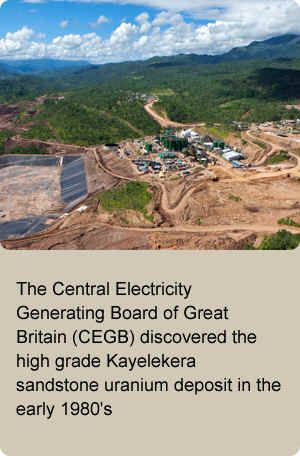 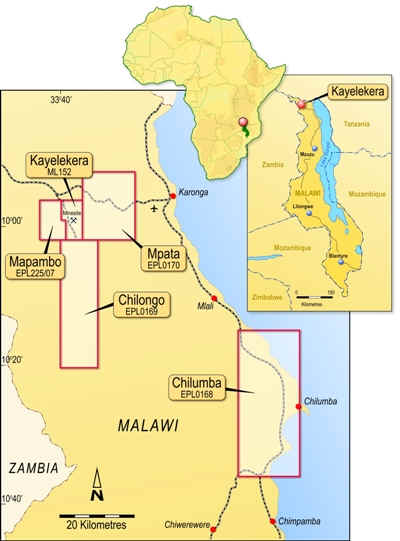 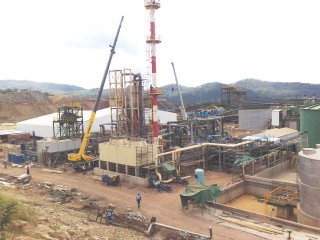 |
|
| General | - | |
| References | - | |
| News |
August 13, 2026 - The Hidden Bottleneck in Uranium Mining
That Most Investors Overlook Went Wrong: Unpacking the June 2026 Shutdown
What caused the acid plant shutdown at Kayelekera in June 2026? July 24, 2026 - Australian mining company Lotus Resources unveiled a financing package on Thursday, July 23, to support the ramp-up of its Kayelekera uranium mine in Malawi. The package includes an A$60.1 million ($41.9 million) equity raising. The move comes after a series of operational setbacks in recent months delayed the mine’s progress toward full production. Mining resumed at Kayelekera in August 2025 after operations had been suspended for more than a decade. Lotus had planned to quickly reach the mine’s nameplate capacity of 2.4 million pounds of uranium a year, equivalent to about 200,000 pounds a month, by early 2026. That target remains out of reach. The mine produced just 155,900 pounds in the second quarter of 2026. The setbacks included an incident in April, sulfuric acid supply constraints and problems at the acid plant. Sulfuric acid is an essential input in uranium ore processing. Lotus now expects to reach nameplate capacity by the end of 2026. Getting there will require further investment to address the site’s performance issues. In addition to the equity raising, the financing package includes an A$35 million bond issue and a $30 million facility backed by an offtake agreement with Swiss commodity trader Mercuria. “The Kayelekera operation is now positioned to deliver the final stages of the ramp up through to steady state production and this funding package completes the balance sheet reset,” Lotus Managing Director Greg Bittar said. Reaching nameplate capacity is also a critical operational milestone. It would demonstrate that Kayelekera can achieve the production level on which the project’s economic and profitability assumptions were based. Lotus is working to bring the mine to that level and improve its ability to meet its long-term supply commitments. The company’s efforts are benefiting from a more favorable market environment. According to Cameco, long-term uranium prices rose from an average of $89 per pound in January to $95.50 in June 2026. The financing remains subject to several regulatory approvals, with the process expected to continue through September. Its completion will be closely watched in Malawi, where Kayelekera is one of the projects the country is counting on to expand its mining industry. The state owns a 15% stake in the mine and is also entitled to a 5% royalty on revenue generated by the operation. June 25, 2026 - Lotus Resources has temporarily paused production at its Kayelekera Uranium Mine after disruptions to third-party sulphuric acid supplies, compounded by issues discovered during commissioning of its on-site acid plant. Before the stoppage, the mine had shown improving output, but steady-state production is now pushed to later in 2026 as the company accelerates maintenance and undertakes interim repairs to the acid plant furnace. The delays in production and export permitting mean Lotus may struggle to meet its 2026 offtake commitments of 1.01 million pounds of U3O8, though it is seeking to defer deliveries into 2027 and estimates a worst-case liability of about US$10 million. The company, which holds US$26 million in cash, is advancing export permits via Namibia, negotiating a US$30 million prepayment and marketing facility with Mercuria, and pursuing equity and quasi-equity funding while keeping its shares in voluntary suspension until a funding solution is finalised. January 30, 2026 - Lotus Resources reported steady operational progress in the December 2025 quarter as it ramps up the Kayelekera mine towards nameplate production, supported by a strong safety performance with no lost-time injuries and a milestone of nearly two million LTI‑free person days. Mining activities advanced with first high-grade ore delivered to the ROM pad and all key equipment and explosives supply in place, though processing in November and December was constrained by sulphuric acid shortages and supply chain disruptions, partly eased by new acid supply contracts and transport capacity. The company’s accelerated restart program remains broadly on schedule, with the on-site acid plant rebuild targeted for commissioning in March 2026, ongoing upgrades to the tailings storage facility and grid power connection, and consistent January mill throughput at around 57% of nameplate levels despite continuing acid and maintenance constraints. Lotus now expects to reach full steady‑state uranium production of about 200,000 pounds per month in the June quarter of 2026 and has shifted its first product shipment timeline to the same period, contingent on completing product qualification with nuclear fuel converters. Against a backdrop of a rising uranium term price of US$87/lb, Lotus has structured most of its 2026 delivery commitments into the second half of the year and is pursuing a strategy of preserving uncontracted production to build inventories for potential price upside, while metallurgical testwork at Letlhakane suggests a significant reduction in acid consumption and a simplified flowsheet that could enhance project economics. The company closed the quarter with A$56.2 million in cash (plus additional equipment finance drawn post‑quarter) and is exploring further financing options, including prepayment and inventory‑backed structures, to support working capital as it transitions into steady production and begins deliveries to utilities. December 6, 2025 - Lotus Resources has reported that its Kayelekera uranium mine in Malawi is progressing toward steady-state production in early 2026, with processing plant performance improving despite earlier sulphuric acid supply challenges. A key development is Lotus rebuilding an on-site acid plant and diversifying acid suppliers, which could materially reduce future operational bottlenecks. We’ll now look at how the move toward steady-state production, supported by the new acid plant, shapes Lotus Resources’ investment narrative. To own Lotus Resources, you really have to believe in Kayelekera becoming a reliable uranium producer and in management turning years of small revenue and recurring losses into sustainable cash flow. The latest update on plant performance and the rebuilt on-site acid plant directly touches the biggest short term catalysts: achieving steady-state production in early 2026 and delivering that first shipment on time. With the sulphuric acid issues being addressed, the operational risk around the ramp-up looks lower than it did when earlier analysis was done, which may support sentiment after a weak 1-year share price return. That said, the story is still high risk: Lotus remains unprofitable, has recently raised over A$197 million through equity, and is relying on a relatively new board and management team to execute. March 26, 2021 - Australia-based mineral exploration firm Lotus Resources has signed an agreement with Kayelekera Resources to increase its ownership stake in the Malawi-based Kayelekera uranium project to 85%. Lotus will exercise its option to acquire a 20% stake in the project through the purchase of all Kayelekera Resources’ shares in Lily Resources, which is a joint venture between Kayelekera Resources and Lotus. Lotus, as a consideration, will issue 226.4 million of its shares to Kayelekera Resources to acquire the latter’s interest in Lily Resources. The remaining 15% interest in the Kayelekera project is held by the Government of Malawi. Lotus chairperson Michael Bowen said: “Kayelekera is one of only a small number of uranium projects with a demonstrated track record of operations, having operated successfully from 2009 to 2014, when it produced almost 11-million pounds of uranium oxide. “Consolidating the ownership of Kayelekera is an important milestone for the company as it positions for a recommencement of operations in an improving price environment. “With work on the restart feasibility progressing, the increase in ownership comes at a time when the uranium price and sentiment in the industry are improving due to an impending supply deficit. As a proven uranium producer, Lotus is well placed.” Last year, Paladin Energy divested its complete stake in the Kayelekera uranium project to Lotus Resources and Lily Resources. Through the deal, Lotus Resources acquired a 65% stake while Lily Resources acquired a 20% stake in the project. March 16, 2020 - Australia-based uranium production company, Paladin Energy has completed the sale of Kayelekera uranium project located in Malawi to Lotus Resources and Lily Resources. Through the deal, Lotus Resources has acquired 65% stake, while Lily Resources has acquired 20% stake in the project. Located in northern Malawi, 52km west (by road) of the provincial town of Karonga and 12 km south of the main road, the project hosts resource with an existing open pit mine and demonstrated metallurgical recoveries. The payment of A$5m ($3m), consisting of A$200k ($123.6k) in the form of cash has already been received by Paladin and a A$4.8M in Lotus Resources shares will be issued to uranium production company. Paladin CEO Ian Purdy said: “The completion of the sale is a positive step forward for Paladin and one which will deliver significant financial benefits to the company. “We can now prioritise our efforts and resources on maximising the value of our world class Langer Heinrich operation. “We are also pleased to be a major shareholder of Lotus Resources Limited and look forward to their future success in adding value to the Kayelekera mine in Malawi.” Under the terms of the agreement, Paladin will pay Lotus $2m to fund planned site restoration including water treatment in recognition of the recent record rainfall at the Kayelekera operations. March 16, 2020 - Australian-based exploration company Lotus Resources Ltd has completed the acquisition of the Kayelekera Uranium Mine in Malawi from Paladin Energy. The mine produced 10.9 million pounds of uranium (4193 tU) from 2009 to 2014 but has been on care and maintenance since then. Paladin said on 13 March it had completed the sale of its 85% interest in Paladin (Africa) Ltd to Lotus Resources (65%) and Lily Resources Pty Ltd (20%). Lotus - formerly Hylea Metals Limited - holds 76.5% of the shares in Lily with Kayelekera Resources Pty Ltd holding 23.5%, giving Kayelekera Resources Pty Ltd an indirect 20% interest in the Kayelekera project. The remaining 15% of shares in Paladin (Africa) Ltd are held by the Malawi government. Paladin is to receive AUD5 million (USD3.1 million), made up of AUD200,000 in cash and AUD4.8 million in Lotus Resources Limited shares - AUD1.8 million on completion and AUD3 million on the third anniversary of completion of the transaction. It will also receive a 3.5% royalty based on revenues derived from future production at Kayelekera, capped at AUD5 million. Paladin will pay Lotus USD2 million to fund planned site restoration including water treatment. This is in recognition of recent record rainfall at the Kayelekera operations, Paladin said. Paladin CEO Ian Purdy said the sale would deliver significant financial benefits to the company. "We can now prioritise our efforts and resources on maximising the value of our world class Langer Heinrich operation," he said. "We are also pleased to be a major shareholder of Lotus Resources Limited and look forward to their future success in adding value to the Kayelekera mine in Malawi." Paladin permitted, constructed, commissioned and operated the open pit mine at Kayelekera until it was placed on care and maintenance due to consistently low uranium spot prices. The mine has 31 million pounds U3O8 of remaining resources. It has a 75% stake in the Langer Heinrich uranium mine in Namibia, where production was suspended in 2018 on to low uranium prices. That mine could return to production within 12 months of a restart decision and favourable market conditions, the company said last October, following completion of a restart pre-feasibility study.
February 7, 2014 - The low price of uranium is more than
some can handle. Australia’s Paladin Energy announced late Friday afternoon
that it would suspend operations at its Kayelekera mine in Malawi.
“The suspension will involve placing the Operation on care and
maintenance until the price of uranium recovers,” the company wrote in a news
release. “This decision will preserve the remaining ore body
until a sustained price recovery occurs and Paladin determines that
production may be resumed on a profitable basis.”
Paladin has notified the Malawi
government – a 15% share holder – of its decision.
Two factors influenced the decision, Paladin explained.
“The continuing depressed price for uranium oxide, which has been
severely negatively impacted since March 2011 following the nuclear reactor
damage caused by the Fukushima earthquake and tsunami; and the unsustainable
cash demand to maintain the loss:making Operation at KM.”
CEO John Borshoff said it would be in the best long-term interest of
all stakeholders and that Paladin would only resume operations once it
becomes profitable to do so.
Following the Fukushima diaster, uranium prices tanked, dropping from a spot
price of around $72 per pound to $35 at present.
Kayelekera has not been breaking even despite performing
“exceptionally well technically,” Borshoff said.
The move will render many jobs redundant and the retrenchment process
has begun. “Retrenched national
employees will receive generous redundancy packages that exceed Malawi’s
minimum legal requirements,” Paladin wrote.
The financial impact on the company will include an impairment charge
of approximately $32 million. Though the financial impact on Paladin’s
balance sheet will be immaterial because the value of the mine has already
been written down to zero. The company took a $180 million write down on the
project in August last year. October 3, 2011 - Paladin Energy Ltd advises that the Kayelekera Mine processing plant has been shut down temporarily to allow replenishment of necessary operational sulphuric acid inventories. As previously announced on the 7th and 16th of September the acid plant has been undergoing remedial repair work made necessary due to localised ground movement and will have an earlier than previously planned re-start. To prepare the acid plant for this start- up, a minimum of 1,600 tonnes of free acid is required to facilitate the recommencement of this facility. The early restart of the acid plant is regarded as a positive outcome, however, it is not possible to run the processing plant and at the same time restore acid stocks to sufficient levels with delays in recent acid deliveries to site. The shutdown of the processing plant will allow required acid stocks to be restored for the earlier start-up of the acid plant. The acid plant is now expected to commence production on the 7th October, one week ahead of schedule. The uranium processing plant will then come back on line approximately 7 days later when the acid plant achieves its nameplate production of 230 tonnes per day and replenishes inventories. The processing plant has been running well since the September announcements were made, with leach recovery averaging 85%, resin-in-pulp (RIP) recovery averaging 97% and overall recovery averaging 81%. No further delays are expected once required acid production is re-established. 2009 - The ramp-up phase is progressing well to date and the ramp-up schedule is being maintained with nameplate production anticipated to be reached by January 2010. The plant has demonstrated full capability to operate throughout its flowsheet and mineralised ore was introduced into the circuit with the first drummed product produced in mid April. Inline with the original schedule, sulphuric acid is currently being trucked to site and stored in the completed bulk acid storage facility for use until the sulphuric acid plant becomes fully operational in late June 2009. |
|
MTPD - Metric Tonne per Day
STPD - Short Ton per Day
MTPA - Metric Tonne per Annum STPA - Short Ton per
Annum
SA - Single Absorption
DA - Double Absorption
* Coordinates can be used to
locate plant on Google Earth