|
||
| Sulphuric Acid on the WebTM | Technical Manual | DKL Engineering, Inc. |
Knowledge for the
Sulphuric Acid Industry

Sulphuric Acid on the Web
Introduction
General
Equipment Suppliers
Contractor
Instrumentation
Industry News
Maintenance
Acid
Traders
Organizations
Fabricators
Conferences
Used
Plants
Intellectual
Propoerty
Acid
Plant Database
Market
Information
Library
Technical Manual
Introduction
General
Definitions
Instrumentation
Plant Safety
Metallurgial
Processes
Metallurgical
Sulphur Burning
Acid Regeneration
Lead Chamber
Technology
Gas Cleaning
Contact
Strong Acid
Acid Storage
Loading/Unloading
Transportation
Sulphur
Systems
Liquid SO2
Boiler Feed Water
Steam Systems
Cooling Water
Effluent Treatment
Utilities
Construction
Maintenance
Inspection
Analytical Procedures
Materials of Construction
Corrosion
Properties
Vendor Data
DKL Engineering, Inc.
Handbook of Sulphuric Acid Manufacturing
Order
Form
Preface
Contents
Feedback
Sulphuric Acid
Decolourization
Order Form
Preface
Table of Contents
Process Engineering Data Sheets - PEDS
Order
Form
Table of Contents
Introduction
Bibliography of Sulphuric Acid Technology
Order Form
Preface
Contents


Acid Plant Database April 8, 2026
| Owner | Glencore |
|
| Location |
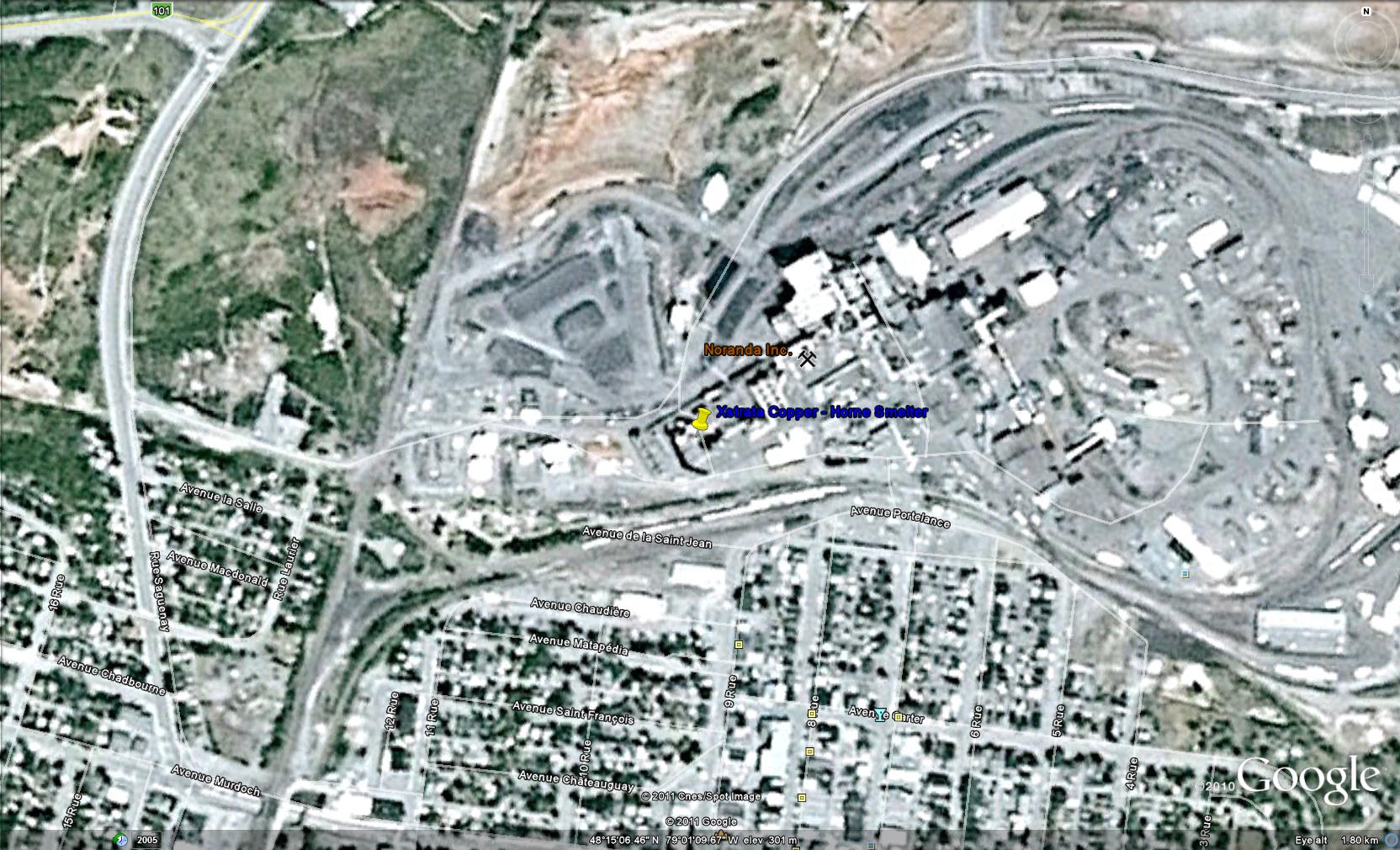
Rouyn-Noranda, Quebec Canada |
|
| Background |
Formerly
- Noranda Inc.  - Falconbridge Limited  - Xstrata Copper www.xstrata.com  |
|
| Website |
www.glencore.com www.glencorerecycling.com |
|
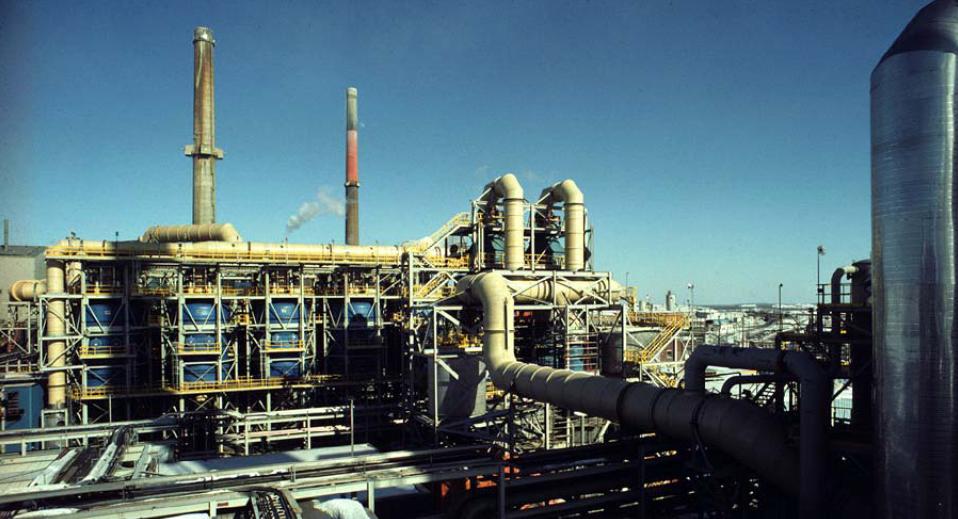
| Plant | Horne Smelter | |
| Coordinates | 48º 15' 6" N, 79º 1' 10" W | |
| Type of Plant | Metallurgical | |
| Gas Source |
Copper, Electronic Scrap Noranda Process Reactor, Converter |
|
| Hot Gas Cleaning | - | |
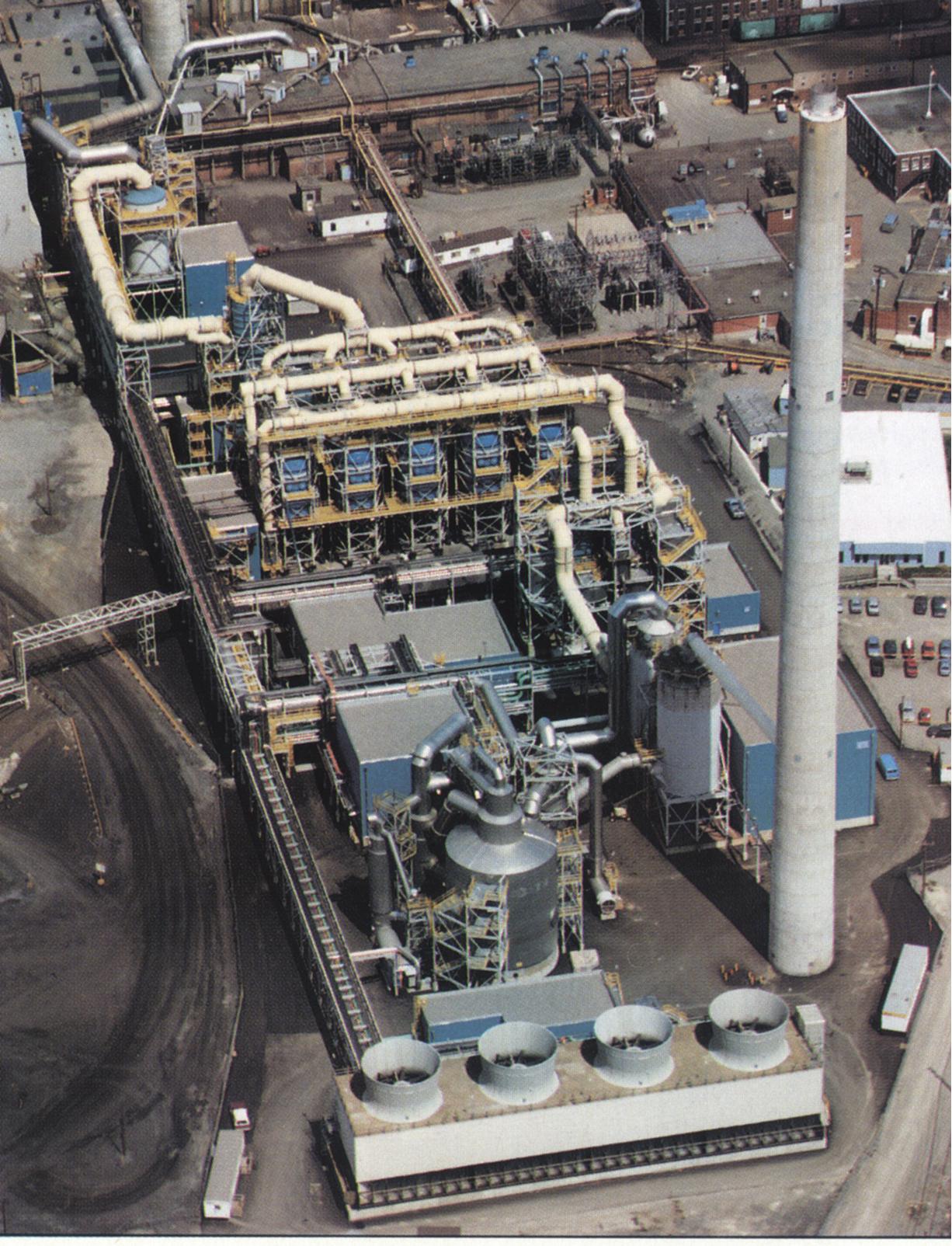
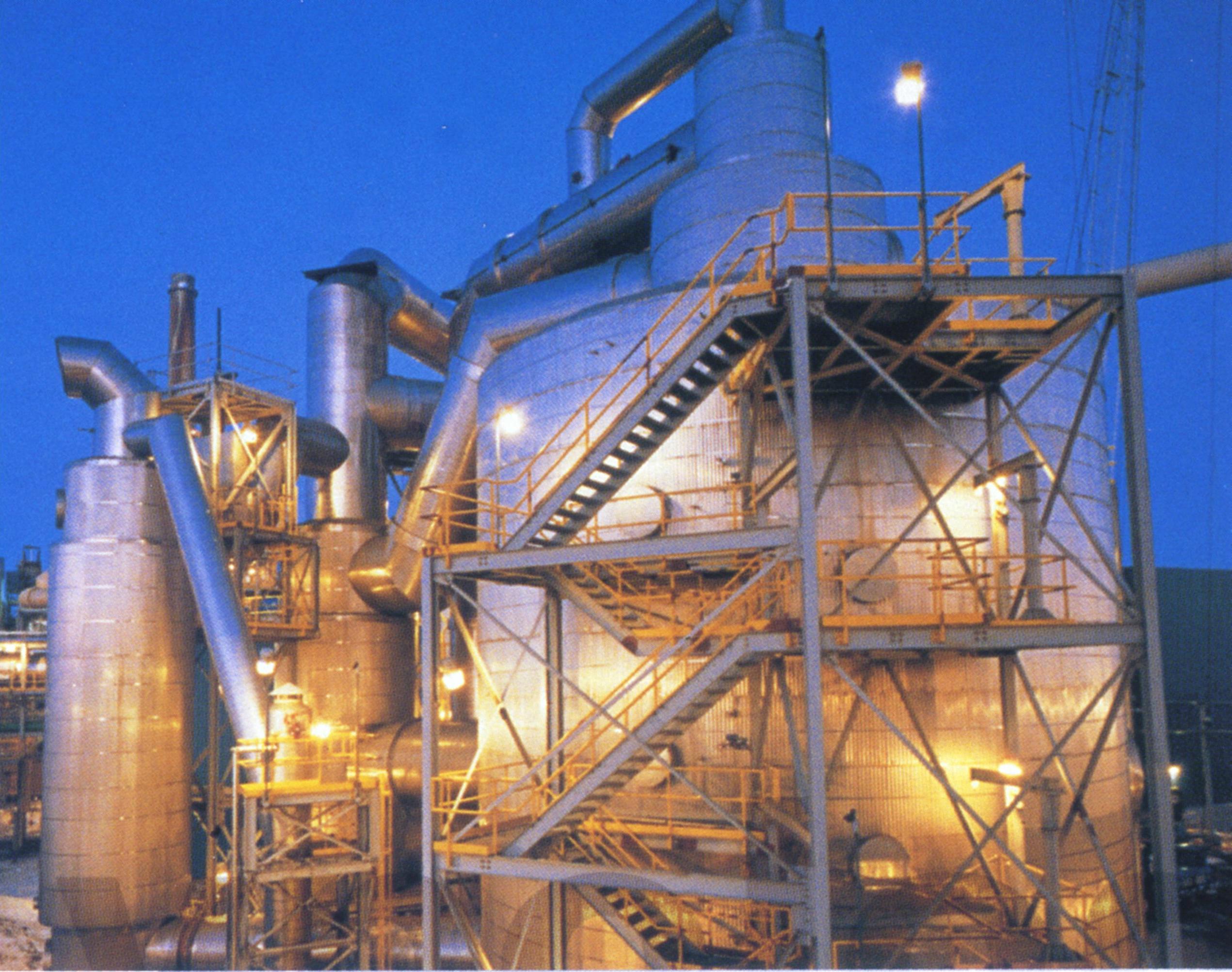
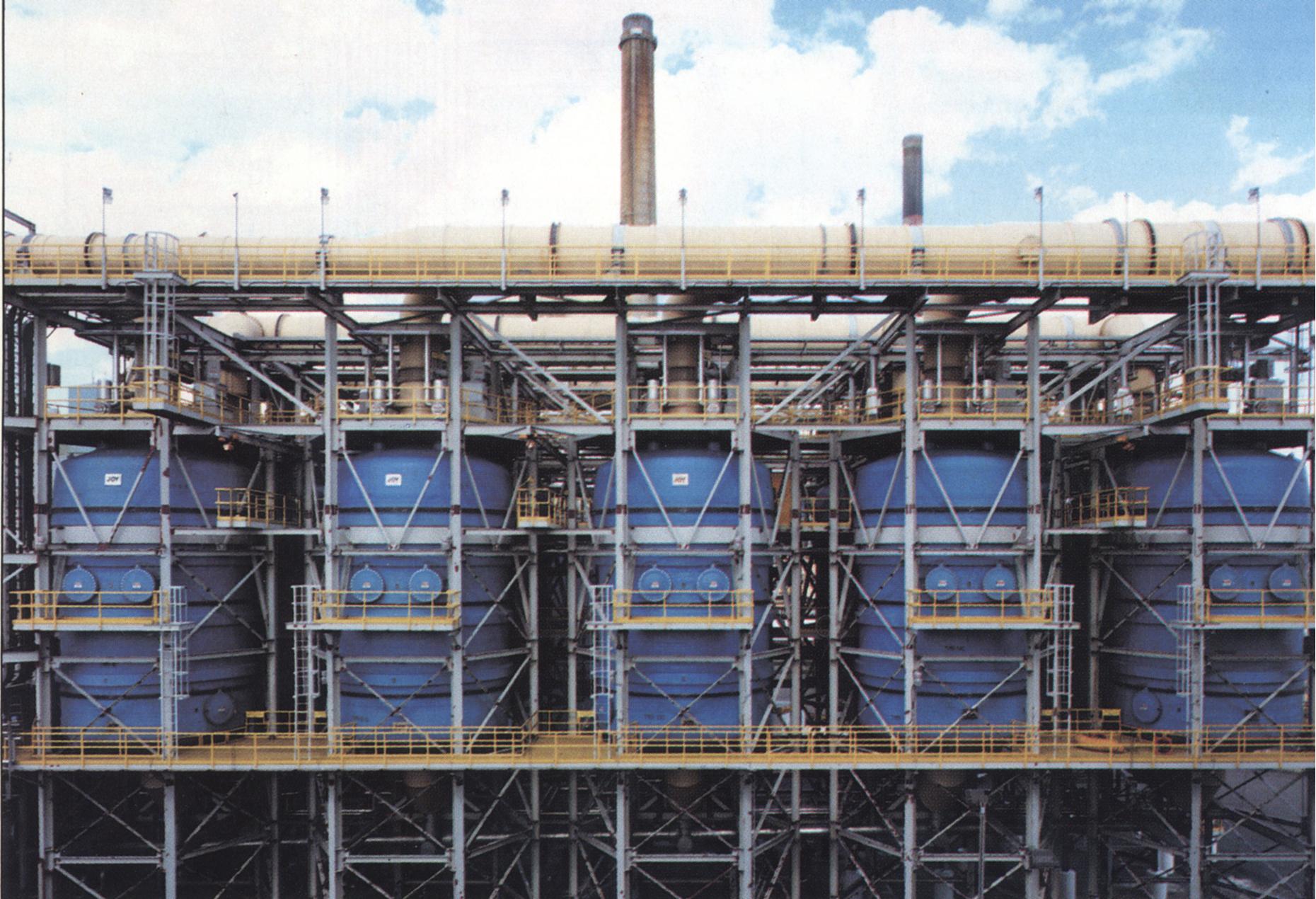
| Wet Gas Cleaning | Quench Venturi (Low Pressure Drop) - Retention Tower - Venturi (Variable Throat) - Cyclonic Separator - Primary Condenser - Primary WESP - Secondary Condenser - Secondary WESP - Hg Removal | |
| Plant Capacity | 2050 MTPD | |
| SA/DA |
3 SA Provisions made in the plant design for future retrofit to double absorption |
|
| Status | Operating | |
| Year Built | 1989 | |
| Technology | Chemetics | |
| Contractor | Chemetics | |
| Remarks |
NOx
Decolourization |
|
| Pictures |
|
|
| General | - | |
| References | - | |
| News |
March 31, 2026 - Commodities giant Glencore is in talks with
Canadian federal and Québec provincial authorities over a potential deal to
keep the Horne smelter operating after stricter emissions rules put a key
piece of North America’s copper supply chain at risk. Canada’s only
copper smelter, located in Rouyn-Noranda, has been at the center of
negotiations since Glencore suspended upgrade plans last month, citing
uncertainty over new arsenic limits. The company warned the plant
could be wound down without changes to the regulatory framework.
Québec has proposed legislative amendments that would delay tougher
emissions standards. The revisions would push a new arsenic cap of 15
nanograms per cubic meter to 2029 and maintain that level until at least
2033. The limit is one-third of current permitted levels, but five
times over the province’s benchmark safety standard. At the same time,
Ottawa is considering a request for about US$108 million in financial
support to help fund pollution control upgrades, according to people
familiar with the matter. “While awaiting regulatory certainty, we are
open to evaluating other mechanisms, particularly financial ones, for
sharing risks,” Glencore said in an email to Bloomberg. Only a small
number of smelters operate across the US and Mexico. Horne processes about
215,000 metric tons of copper concentrate and scrap annually, representing
roughly 16 percent of North America’s smelting capacity. The facility
also supplies Glencore’s Canadian copper refinery in Montreal. The company
has said about 3,200 direct and indirect jobs could be affected if the
smelter closes. It produces copper, as well as by-products including gold,
silver, platinum, palladium and sulfuric acid, and processes about 100,000
tons of electronic scrap each year. Glencore has spent about US$130
million on emissions reduction measures, including acquiring more than 50
homes to create a buffer zone around the site. A total of 82 properties are
slated for demolition. The negotiations come as the facility faces
ongoing scrutiny over emissions. Medical data has shown higher rates
of chronic obstructive pulmonary disease in Rouyn-Noranda compared with
provincial averages, and a class action lawsuit tied to emissions was
authorized last year. Public health officials have warned that delaying
stricter emissions targets could prolong exposure risks, particularly for
nearby residents. Meanwhile, Québec officials have defended the
proposed timeline changes, arguing they are necessary to enable investment
while maintaining compliance. Louis Potvin, spokesperson for Québec's
Ministry of Environment, maintained that the amendment would allow the Horne
smelter to proceed with required upgrades and meet its permit conditions,
including the 15 nanograms per cubic meter arsenic limit. “The
ministry took into account the position of the national public health
authority, which deemed the postponement acceptable last October, and the
City of Rouyn(-Noranda) also supported this postponement,” Potvin told CBC
News. The outcome of the talks will determine whether the company
proceeds with its investment or begins winding down operations at one of the
region’s few remaining copper-smelting facilities. January 15, 2009 - Horne Smelter management announces that it is reducing its workforce and capital expenditures to strengthen its viability in current market conditions. The decision comes after careful evaluation of the impact on the Horne operations of the closure of Fabie Bay Mine, a custom milling client, and a reduction in the volume of recycled feed. In total, 55 permanent operational positions associated with milling ore from Fabie Bay Mine and the recycling operation will be made redundant. In addition, the announcement will impact approximately 30 consultants and other contractors. The challenging operating environment requires the Horne Smelter to scale back capital expenditures in 2009. However, investments related to important environmental improvement projects will continue, including the CDN$5 million project to install a secondary hood to capture fugitive emissions and reduce arsenic concentrations in the ambient air in the Notre-Dame neighbourhood. “The smelting business has recently faced a challenging operating environment and it is important that we respond rapidly to this downturn in the market and make the necessary adjustments,” said Claude Bélanger, General Manager of the Horne Smelter. “The Horne Smelter is a stand-alone custom smelting facility that operates in a very competitive environment. Full asset utilization and cost management are essential for Horne’s long-term viability.” said Mr. Bélanger. “We will give our people the support they need to minimize the impacts of these measures on them as much as possible. A number will be transferred to other jobs in the smelter,” added Mr. Bélanger. |
|
MTPD - Metric Tonne per Day
STPD - Short Ton per Day
MTPA - Metric Tonne per Annum STPA - Short Ton per
Annum
SA - Single Absorption
DA - Double Absorption
* Coordinates can be used to
locate plant on Google Earth