|
||
| Sulphuric Acid on the WebTM | Technical Manual | DKL Engineering, Inc. |
Knowledge for the
Sulphuric Acid Industry

Sulphuric Acid on the Web
Introduction
General
Equipment Suppliers
Contractor
Instrumentation
Industry News
Maintenance
Acid
Traders
Organizations
Fabricators
Conferences
Used
Plants
Intellectual
Propoerty
Acid
Plant Database
Market
Information
Library
Technical Manual
Introduction
General
Definitions
Instrumentation
Plant Safety
Metallurgial
Processes
Metallurgical
Sulphur Burning
Acid Regeneration
Lead Chamber
Technology
Gas Cleaning
Contact
Strong Acid
Acid Storage
Loading/Unloading
Transportation
Sulphur
Systems
Liquid SO2
Boiler Feed Water
Steam Systems
Cooling Water
Effluent Treatment
Utilities
Construction
Maintenance
Inspection
Analytical Procedures
Materials of Construction
Corrosion
Properties
Vendor Data
DKL Engineering, Inc.
Handbook of Sulphuric Acid Manufacturing
Order
Form
Preface
Contents
Feedback
Sulphuric Acid
Decolourization
Order Form
Preface
Table of Contents
Process Engineering Data Sheets - PEDS
Order
Form
Table of Contents
Introduction
Bibliography of Sulphuric Acid Technology
Order Form
Preface
Contents


Acid Plant Database May 3, 2026
| Owner | Nyrstar |
|
| Location | PO Box 219 Ellen Street Port Pirie SA 5540 Australia |
|
| Background |
Formerly - The Broken Hill Assoc. Smelters Pty Ltd. - Pasminco - Zinifex 2007 - Nystar today announced that as of 31 August 2007 it had taken ownership of the zinc and lead smelting and alloying assests of Umicore and Zinifex, thereby formally launching the company and creating the world’s largest zinc producer. |
|
| Website | www.nyrstar.com | |
| Plant | - | New Plant |
| Coordinates | 33º 9' 58" S, 138º 0' 38" E | |
| Type of Plant | Metallurgical | Metallurgical |
| Gas Source |
Pb Ausmelt Formerly: Sinter Machine |
Pb Ausmelt |
| Plant Capacity | 350 MTPD | 1000 MTPD |
| SA/DA | - | 3/1 DA |
| Status | Operating | Operating |
| Year Built | - | |
| Technology | Lurgi Australia | |
| Contractor | - | Ducting Contractor: Steel Link |
| Remarks | - | |
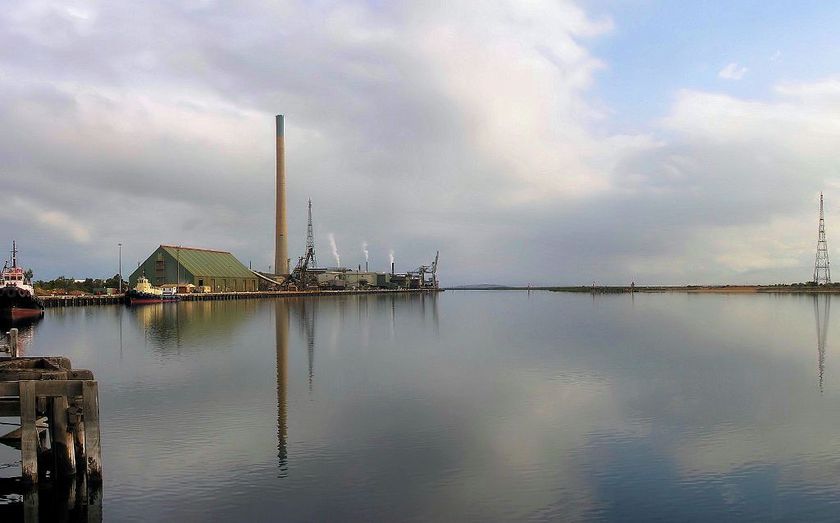
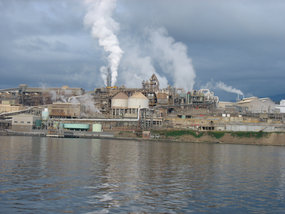
| Pictures | 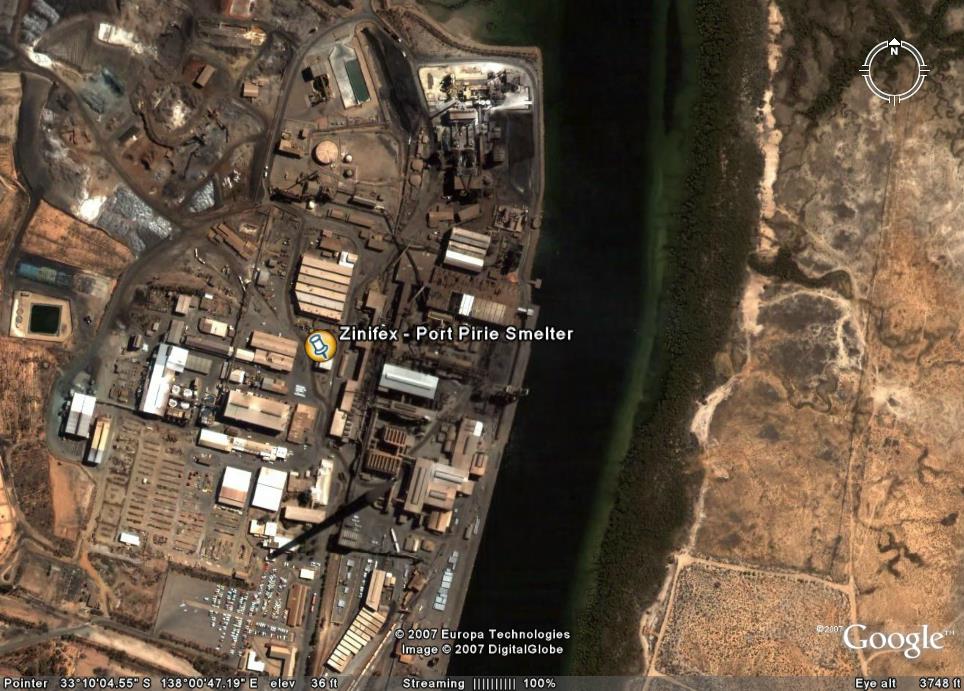 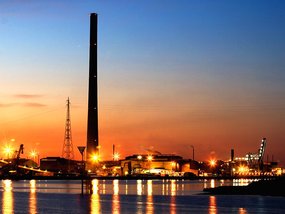 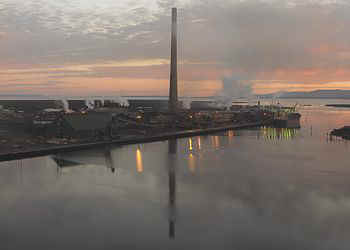
|
.jpg)
.jpg)
.jpg)
.jpeg) |
| General |
Construction of the new Pb Ausmelt furnace
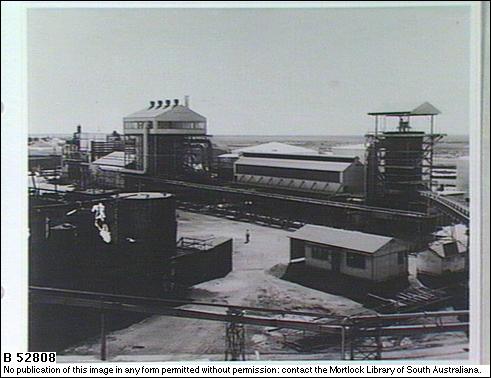
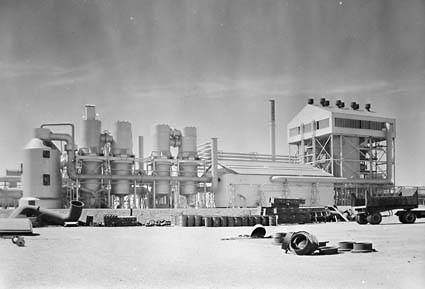
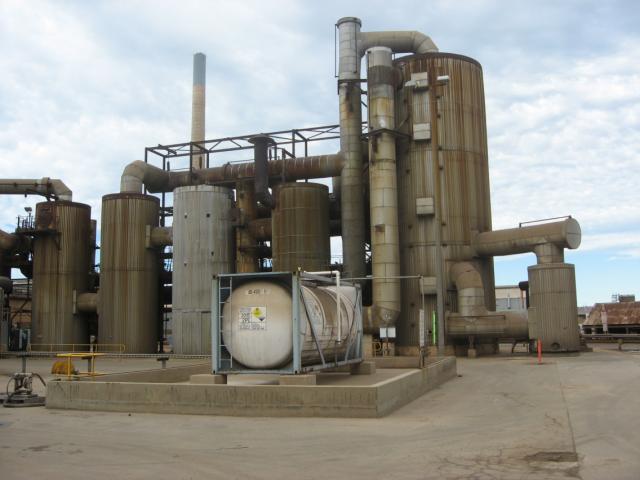
http://comeseechange.com/smelter-redevelopment/ Port Pirie is an integrated multi metal smelter and refinery with flexibility to efficiently process a wide range of lead-dominant feedstocks. Its products include refined lead and lead alloys, silver, zinc, copper, gold and sulphuric acid. Port Pirie is located on the eastern shore of Spencer Gulf, South Australia and its operations and residue stockpiles are located on site. There is an adjacent dedicated port facility and products are dispatched by road and rail. The smelter was built in 1889 for processing early Broken Hill lead concentrates. Since then it has been progressively upgraded and is now the largest primary lead smelter in the world. Currently, its blast furnace limits its capacity to approximately 245,000 tonnes per year, however, other parts of the facility have a capacity of approximately 270,000 tonnes. The current zinc and copper production facilities were commissioned in 1967 and 1984 respectively and the lead smelter in which gold and silver are largely recovered was rebuilt in 1998. Port Pirie leases and operates the adjacent port facility from the Flinders Ports Corporation under a long-term arrangement. It operates a concentrate and residue unloading facility as well as the finished metal product and acid loading facility. Port Pirie's strategy is to build on its scale and product flexibility, while continuing to meet the cost of sustaining its process plant and infrastructure. It intends to achieve this through diversifying its concentrate supply sources, expanding its production of high value metals, accelerating recovery of the zinc metal contained in current and historic residues and reducing its working capital and operating costs.
Process
Environmental Management |
|
| References | Sulfuric Acid Today - Fall/Winter 2021 - Nyrstar's Port Pirie tackles NOx at Sulfuric Acid Plant | |
| News |
May 1, 2026 - Taxpayers look set
to provide more funding amid concerns for the future of more than 1000
smelter workers in Port Pirie as a $135 million assistance package expires
today. Premier Peter Malinauskas with the antimony produced at Nystar in
Port Pirie earlier this year. Uncertainty has emerged at Nyrstar for
workers as a rescue package for its smelters in South Australia and Tasmania
runs out today, taxpayers looking on the line for more funding support.
Premier Peter Malinauskas said he was “hopeful that by close of business
today, we’ll see a renewed position from the three governments that are
contributing to this effort for Nyrstar’s consideration over the coming days
and weeks ahead”. “As it stands right now, those negotiations are
ongoing and we have not yet reached a final resolution with Nyrstar,”
Malinauskas said. “This is a question of national capability to be
able to produce critical minerals and if we can’t do this for ourselves as a
country, then we don’t have the ability to participate in the economy of
tomorrow. “It could be exactly the same as us giving up our fuel
refining capacity over the last 15 years which we now look back on with
regret. Let’s not make the same mistake with the nation’s smelting
capacity.”
January 5, 2023 - Nyrstar is restarting its Port Pirie lead smelter in South Australia following a planned 55-day outage, BESB has learned. The shutdown, which began last October, was part of an AUD45 million ($28 million) works and maintenance programme — focused on rebricking the hearth of the top submerged lance furnace, as well as major capital works in the blast furnace, acid plant and across the site. A Nyrstar spokesperson told BESB on January 4 that the plant was restarting production, having concluded work to “further support improvement of Port Pirie’s emissions and operational performance”. Meanwhile, the spokesperson confirmed the start of “early works” on its product recycling facility (see image) at Port Pirie aimed at further reducing lead in air concentrations. Once completed, the facility will be sealed and under negative air pressure, allowing intermediate materials used in the production process to be stored and mixed in an enclosed facility. The facility will be built near existing processing plants to “reduce the handling and transport of materials in the open air”, Nyrstar said. South Australia’s state government is contributing AUD7 million to the AUD23 million project. Port Pirie general manager Mat Lynn said: “Nyrstar Australia will continue to focus on how we can continue to improve our operations to reduce lead in air concentrations and complement the targeted lead abatement program and actions of the state government, Port Pirie Regional Council and people of Port Pirie to reduce lead levels within the local community.” In June 2020, Port Pirie signed a new licence agreement with Australia’s Environment Protection Authority to cap emissions by 20% as well as submit a comprehensive lead monitoring plan. The Port Pirie smelter has been in continuous operation for more than 130 years on the Port Pirie river, 230km north of Adelaide. The plant is one of the world’s largest multi-metal smelters, producing lead, silver and by-products such as sulphuric acid.
The Nyrstar Port Pirie Transformation project will deliver an innovative and sustainable solution to the current environmental and technical challenges facing the Nyrstar Port Pirie operation. If commissioned, the new facility is expected to have an operating life in excess of 30 years. The Port Pirie Smelter has been in continuous operation since 1889, with many of the core production assets having been in service for up to 60 years. While considered best practice at the time, these assets are no longer capable of meeting the increasingly stringent environmental and operational standards expected of a modern base metals facility. Nyrstar has reached an in-principle funding and support agreement with the South Australian and Commonwealth Governments to redevelop the Port Pirie smelter (the “Transformation”). The Transformation, subject to feasibility studies, would include investment in new technology to upgrade the facility to an advanced poly-metallic processing and recovery facility capable of processing a wide range of high value, high margin raw materials and resulting in an improved environmental footprint and a step change reduction in airborne metal and dust emissions. The progression of the first phase of the Transformation into execution is dependent on the successful completion of pre-feasibility and bankable feasibility studies, which is expected to complete by the end of 2013. Assuming that the Transformation is to be completed as expected, commissioning of the new plant is expected to occur early in 2016. Nyrstar’s strategic solution involves transforming its Port Pirie operations away from that of a primary lead smelter into a highly flexible poly-metallic processing and recovery facility. Outdated process plant will be permanently decommissioned in favour of state-of-the-art, best available technology. Specifically, the proven technology will replace the outdated sinter plant with a state-of-the-art oxygen enriched bath smelting furnace, coupled to an electricity cogeneration facility and a new sulphuric acid plant. Application of fully enclosed bath smelting technology will both deliver a step change reduction in emissions from the site and allow a greater range of valuable metals to be recovered and produced. A potential Stage Two would allow replacement of the existing blast furnace with a second bath smelting furnace, further improving process efficiency. High temperature, oxygen enriched bath smelting is acknowledged globally as best available technology for integrated base metals production and has a range of features and benefit. Council believes that the Nyrstar Transformation Project represents not only a significant $350 million investment in the City, but it will also provide the certainty required to attract other business investment in the Region. Council and its partners will be seeking to leverage off of the Nyrstar Investment and seek to diversify the regional economy by providing more employment opportunities to the residents of Port Pirie.
Nyrstar has shut down its Port Pirie lead smelter in South
Australia as part of a planned A$45 million ($28 million) works programme, BESB has
learned.
August 30, 2021 - The owners of
Port Pirie's lead smelter have been fined $35,000 for a series of failures
that led to 700 litres of "toxic" sulphuric acid leaking from the plant into
waterways and mangroves near the town. Nyrstar caused material
environmental harm by polluting the environment through toxic waste leakage
between January 31 and February 2, 2019 — the extent of that harm could not
be quantified. The Environment, Resources and Development Court
previously heard the company did not respond for about eight hours as it
made "a wrong assumption" that the leak only contained weak acid.
Judge Paul Muscat said the case was not a "flagrant disregard" by Nyrstar
and sat at the lower end of the scale. "An incident of this general
nature was not entirely unforeseeable and effective mechanisms to prevent it
could — and should — have been implemented," he said. "The incident
was not caused by a single error but a combination of small failures in
processes and human error that led to environment harm. "These systems
and processes were clearly insufficiently designed and not implemented to
the required standard. "The harm in this case is to be limited to
potential environmental harm that is not trivial." The acid leak
occurred when the systems the Nyrstar had in place to prevent a spillage
"failed", with sulphuric acid corroding a wrongly installed valve on the
very system designed to safeguard against leakage. It led to "a slug"
of acid filtering into the waterways. The Environment Protection
Authority previously — in seeking a penalty of up to $120,000 — told the
court the leak increased the presence of heavy metals in the natural and
manmade waterways that were toxic to aquatic life, but it could not be
"conclusively proven" that the acid leak was responsible for killing fish,
as there was an algal bloom present at the same time. A spokesperson
for Nyrstar said quick action was taken after the spill to replace the
affected valve. "Nyrstar also made adjustments and upgrades to
ancillary equipment to reduce the likelihood of further spills, and improved
its monitoring and response processes to better manage potential spills,"
the spokesperson said. "Nyrstar has fully cooperated from the outset
with the EPA investigation and subsequent court proceedings. "In
addition, it undertook its own investigation and shared its data and
findings with the EPA. "Since the date of the spill, Nystar's new
management has driven further significant environment- and safety-related
upgrades at the Port Pirie site." Judge Muscat gave Nyrstar credit
for addressing the inefficiencies in its systems. The company has also
been ordered to pay costs of $5,000.
March 25, 2020 - South Australia's environmental watchdog
will prosecute a Belgian company over allegations 700 litres of acid leaked
from its Port Pirie lead smelter into a creek.
The Environment Protection Authority (EPA) will prosecute
Belgium-based Nyrstar Port Pirie Pty Ltd in the Environment, Resources and
Development (ERD) Court for allegedly causing serious environmental harm.
The EPA will allege Nyrstar polluted the environment by "discharging,
or failing to prevent the discharge of, about 700 litres of sulphuric acid"
from its smelter into First Creek between January 31 and February 3 last
year. "Potential environmental
harm was caused by polluting the environment and creating harmful conditions
for fish and other plant and animal life in the creek," the EPA said in a
statement. In a statement,
Nyrstar confirmed the EPA had issued it with a summons to appear in court.
"Nyrstar does not intend to provide ongoing commentary in relation to
this matter given it involves legal proceedings."
In October 2019, ABC News questioned the company over allegations
mass fish deaths had occurred in a breeding ground near the factory site.
At the time, Nyrstar said "the incident occurred following the
failure of a valve and ultimately resulted in a discharge into the water
course". Documents from the EPA,
released under Freedom of Information, alleged sulfuric acid leaked from
Nyrstar's factory into Port Pirie's First Creek on January 31.
The EPA refused to release a summary of the incident, however
February briefings to South Australia's Primary Industries Minister Tim
Whetstone said "localised fish kills" had occurred in mangroves, with State
Government investigators unable to assess the damage for at least five days
after the spill. August 1, 2019 - A South Australian smelter owned by Nyrstar in the state's mid north will resume production after the company was acquired by Trafigura. Nyrstar disabled its Port Pirie blast furnace in May amid an outstanding debt owed to the South Australian government. Treasurer Rob Lucas announced on Thursday that he approved the majority takeover by global commodity trading giant Trafigura, which came into effect in Europe overnight. A repayment regime for a $291 million government loan has been implemented for the Port Pirie smelter, which Mr Lucas said provides greater certainty. "We now have a clear path forward for the strong future of the Port Pirie smelter under the new ownership of one of the world's leading global commodity trading companies, Trafigura,'' said Mr Lucas. After long-running negotiations, Singapore-based Trafigura promised to pay off the outstanding debt by November 2022. Nyrstar had previously failed to make payments on time as financial analysts warned investors earlier this year the company had a high probability of default. June 7, 2019 - Nyrstar is in another tricky situation, and has allegedly halted production at its Port Pirie lead smelter and declared force majeure. According to Reuters, the European zinc smelter stopped output at Port Pirie, located in South Australia, in late May, due to an unplanned outage at its blast furnace. “We are currently in the process of assessing the outage and expect that production should resume within the coming days. There will be a negative impact to Nyrstar’s lead metal production due to the outage,” a company spokesperson told Reuters. he asset produced 160,000 tonnes of lead in 2018, a 7 percent drop from the year before, which the company attributed to a planned 38 day blast furnace maintenance outage and a shutdown of the blast furnace later that year. Port Pirie, an integrated multi-metal recovery plant, is one of the largest primary lead smelting facilities in the world and is the third largest silver producer, according to Nyrstar. The company has been working on a redevelopment project surrounding the asset, which involves converting Pirie’s operations into an “advanced metal recovery and refining facility.” The conversion process entails replacing the existing sinter plant with an oxygen-enriched bath smelting furnace and replacing the existing sulfuric acid plant with a new plant that hosts a larger capacity and upgraded technology. Nyrstar is still in the ramp-up process of Port Pirie’s redevelopment, with a 2018 full-year report from the company marking the project’s total price tag at AU$714 million. The company has been in financial hot water for the last several months as it has relied on shareholder funding to help dodge the bankruptcy bullet. In April, major shareholder Trafigura Group announced it would be taking control of the company through a lockup deal that entailed interim funding arrangements to keep Nyrstar’s operations ongoing. The deal saw Nyrstar receive US$250 million in secured bridge financing, a boost the company gained just months after Trafigura provided a US$650 million working capital facility to help Nyrstar’s liquidity. As of Wednesday (June 5), lead was trading at US$1,880.50 per tonne on the London Metal Exchange. In Brussels, Nyrstar shares closed 2.14 percent lower on Thursday (June 6), hitting 0.19 euros. April 8, 2019 - Children in Port Pirie are being exposed to the highest levels of toxic airborne lead and sulphur dioxide in Australia, causing respiratory problems and risks to cognitive development. According to a new study, these serious risks to human health have accelerated in the last few years despite decades of warnings about the health impacts of pollution from the nearby smelter. January 22, 2017 - Smelting group Nyrstar has opened its upgraded metals processing plant at Port Pirie, north of Adelaide, after a $600 million investment to cut pollution and ensure its long-term viability.Premier Jay Weatherill says the upgraded plant has secured 730 ongoing jobs and will allow the company to significantly reduce emissions."For Nyrstar, improved efficiencies provide a pathway to uplift earnings and for Port Pirie we can lock in better health and environment outcomes for decades to come," Mr Weatherill said as he visited the plant on Monday.Nyrstar chairman Martyn Konig said the smelter had played a strong role in the changing face of Port Pirie for more than 127 years."Nyrstar is proud and committed to continue to be a fundamentally important part of the economic and social landscape in Port Pirie," he said.Mr Konig said Nyrstar also valued a commitment to sustainability and one of the most important reasons for the redevelopment was the significant environmental benefits it promised to deliver.That included moving to a completely enclosed furnace design to capture dust and sulphur dioxide emissions which would result in a markedly improved environmental footprint, he said.SA Treasurer Tom Koutsantonis said the Nyrstar development had also provided up to 600 jobs during the construction phase and local companies were awarded contracts worth about $90 million."But just as importantly, securing the future for Port Pirie has encouraged other businesses to invest in new developments due to the certainty we have created," he said.Mr Weatherill said without the redevelopment, the closure of the Port Pirie facility had been a possibility.'That would have been catastrophic on a number of levels, environmentally, socially but of course economically for this region," he said.The premier said the government had two key goals in supporting the project, protecting the health of the local community and protecting local jobs. November 15, 2017 - Global multi-metals business Nyrstar has raised €100 million (US$118.5 million) through a private placement as it looks to restart the Myra Falls copper-zinc-lead mine in British Columbia, Canada, and redevelop the Port Pirie zinc-lead smelter in Australia. It placed 15.4 million new shares with institutional investors at €6.50 per share, with the new shares representing 16.4% of the number of outstanding shares before the transaction. The deal is supposed to close on November 17 when Nyrstar shares will total 109 million. Of the total proceeds, €30 million will be used to restart Myra Falls in British Columbia, which was suspended in October 2015. The remainder will fund the €70 million capital investment required to finish the redevelopment of Port Pirie in South Australia, which is being ramped up and should result in "a substantial earnings uplift from 2018 onwards". The redevelopment includes replacing the old sinter plant with an oxygen enriched bath smelting furnace, replacing the old sulphuric acid plant with a new plant with greater capacity and upgrading technology at the smelter. May 16, 2014 - Belgium’s Nyrstar, the world’s largest zinc smelter, said it had agreed a funding package with the Australian government to upgrade and expand its 125-year-old lead smelter in Port Pirie, Australia. Nyrstar said the investment would transform the smelter into an advanced metals recovery and refining centre, which would process concentrates from the company’s mines and residues from its zinc smelters. Completion is set for the end of 2016. The upgrade will enable the plant, which processed less than 180,000 tonnes of lead in 2013, to produce up to 250,000 tonnes of the refined metal, which is used in batteries. It will also have the capacity to produce 7,000 tonnes of copper in matte, 40,000 tonnes of zinc in fume, 25 million ounces of silver dore and 100,000 troy ounces of gold. The total cost of the redevelopment will be 514 million Australian dollars ($480.6 million), higher than the initial estimate of A$351 million because Nyrstar will construct a new sulphuric acid plant on the site. Nyrstar also said it would cease production at its zinc smelter at the Port Pirie complex by the end of July and close it by the end of 2015. Output volumes have been deteriorating and costs rising at the plant, which has the highest cost of Nyrstar’s six zinc smelters. The Port Pirie complex directly employs 800 people, or 17 percent of the working population of South Australia, and about 2,500 people directly or indirectly, the company said. The impact on jobs is not yet known, but overall job losses are unlikely, a company spokeswoman said. The decision to upgrade the plant came after a strategic review of Nyrstar’s processing facilities, which found the technology and the process needed to be redesigned to improve efficiency and reduce costs. A review of Nyrstar mining operations is currently underway. Nyrstar said it would contribute A$103 million on the overhaul, and the remained would come from a special purpose vehicle (SPV). The SPV will seek around A$291 million in financing from third parties and will benefit from a guarantee from Australia’s export credit agency. A further A$120 million will come from the forward sale of future silver production. Nyrstar said the redevelopment would generate a post-tax leveraged internal rate of return of 25-30 percent. It said capital expenditure this year would be 290-335 million euros. It had previously forecast 265-335 million euros. |
|
MTPD - Metric Tonne per Day
STPD - Short Ton per Day
MTPA - Metric Tonne per Annum STPA - Short Ton per
Annum
SA - Single Absorption
DA - Double Absorption
* Coordinates can be used to
locate plant on Google Earth