|
||
| Sulphuric Acid on the WebTM | Technical Manual | DKL Engineering, Inc. |
Knowledge for the
Sulphuric Acid Industry

Sulphuric Acid on the Web
Introduction
General
Equipment Suppliers
Contractor
Instrumentation
Industry News
Maintenance
Acid
Traders
Organizations
Fabricators
Conferences
Used
Plants
Intellectual
Propoerty
Acid
Plant Database
Market
Information
Library
Technical Manual
Introduction
General
Definitions
Instrumentation
Plant Safety
Metallurgial
Processes
Metallurgical
Sulphur Burning
Acid Regeneration
Lead Chamber
Technology
Gas Cleaning
Contact
Strong Acid
Acid Storage
Loading/Unloading
Transportation
Sulphur
Systems
Liquid SO2
Boiler Feed Water
Steam Systems
Cooling Water
Effluent Treatment
Utilities
Construction
Maintenance
Inspection
Analytical Procedures
Materials of Construction
Corrosion
Properties
Vendor Data
DKL Engineering, Inc.
Handbook of Sulphuric Acid Manufacturing
Order
Form
Preface
Contents
Feedback
Sulphuric Acid
Decolourization
Order Form
Preface
Table of Contents
Process Engineering Data Sheets - PEDS
Order
Form
Table of Contents
Introduction
Bibliography of Sulphuric Acid Technology
Order Form
Preface
Contents


Acid Plant Database July 17, 2014
| Owner | Lead-Zinc Complex AD - Kardjali (LZC AD - Kardjali) |
|
| Location |
127 Boulevard Bulgaria |
|
| Background | ||
| Website | www.ock-bg.com | |
| Plant | - | |
| Coordinates* | 41° 37' 43" N, 25° 24' 21" E | |
| Type of Plant | Metallurgical | |
| Gas Source |
Zinc |
|
| Plant Capacity | 300 MTPD, 93 to 98.5% H2SO4 | |
| SA/DA | DA | |
| Emissions | SO2: <100 ppm | |
| Status | 2012 - Bankruptcy | |
| Year Built | - | |
| Technology | Outokumpu Technology (Outotec) | |
| Contractor | - | |
| Remarks |
- Outokumpu Technology provided know-how, engineering and basic engineering
of equipment for the roaster and sulphuric acid plant for €35 million. Power Consumption |
|
| Pictures | 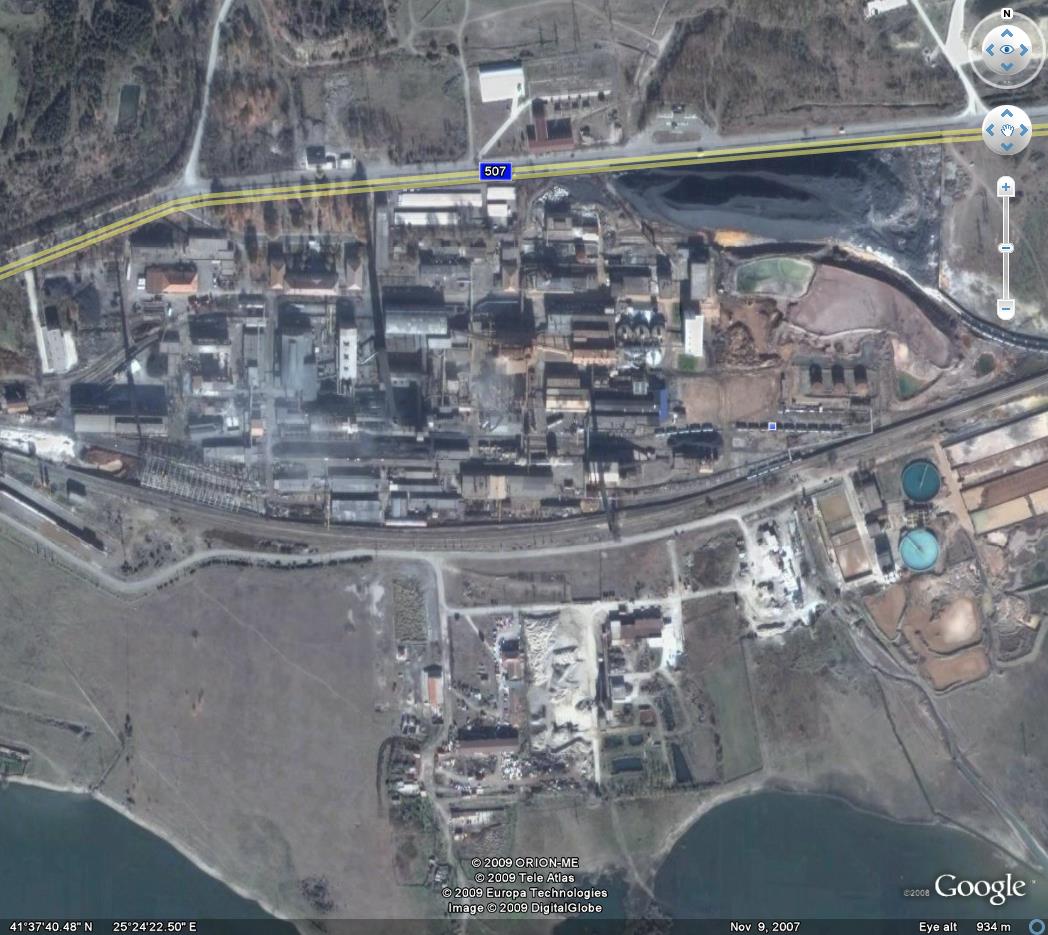 |
|
| General | 1955 – Production begins on the site with 5000 tons zinc and 7000 tons sulphuric acid | |
| Reference | - | |
| News |
March 27, 2014 - The construction of the new zinc plant in
Kardzhali Bulgaria is set to begin in a Canadian-Spanish and German
cooperation. The involved companies will be Canadian SNC-Lavalin, German
Outotek and Spanish Asturiana, announced Harmony 2012 , the new owner of the
metallurgical plant. John Elkin , the director of Harmony 2012 explained
that the principal activities of the manufacturing plant will begin within
two months, which will make room for new facilities, Standart wrote.The
project includes the construction of an entirely new roasting plant, a new
plant for the production of sulfuric acid and a new electrolyte facility.
The new factory is to be built according to world standards and will meet
all environmental standards and requirements, the management says.The
construction of new plants is necessary due to the full amortization of the
existing industrial buildings, installations and equipment. American Chamber
of Commerce, Bulgaria December 7, 2013 - The construction works for the new zinc plant at the site of bankrupt lead and zinc smelter OTZK Kardzhali are to start in June 2014. The clearing of the production site is to start in early 2014, according to Kardzhali District Governor Biser Nikolov. Nikolov, as cited by the BGNES news agency, presented the plans on Saturday, expressing hopes that the municipal authorities would make sure that the necessary permits were issued as soon as possible. September 14, 2012 - After more than a year of uncertainty over the future of the country’s largest non-ferrous metal producer LZC, reported in previous newsletters, the Kardzhali plant was sold this month to Harmony 2012 Ltd. While four hours before the bidding deadline no offers had been submitted, three bids emerged last minute. The plant was sold for 8.6 million Lev (4.4 million euro) and includes the plant’s premises and land but not its machines. The total debt of the plant under its current owner is estimated at 350 million Lev (179 million euro). June 1, 2012 - The Polish consortium Silesia and the majority owner of the troubled Lead and Zinc Complex (LZC; OTZK) in Bulgaria's Kardzhali will sign a 3-year management contract. The news emerged after a meeting of the Control Board of the Complex and the Board of Directors of Intertrust Holding, which is the majority owner. In a statement to the Bulgarian Stock Exchange, the Holding grounds the decision to finalize negotiations with Silesia on the lack of real investor's interest, social and public tensions, and the opinion of bank lenders. The largest Bulgarian producer of non-ferrous metals, the Lead and Zinc Complex (LZC; OTZK) in the southern city of Kardzhali has been in trouble for at least several months now, with many fearing that the heavily indebted LZC, which has been out of operation in the past four months, will have the fate of Kremikovtzi, the behemoth steel mill near Sofia, which no longer operates as a result of years of mismanagement. The creditors and trade unions have agreed to seek a way to fuel the Lead and Zinc Complex in Kardzhali again. April 18, 2011 - Olovno Tzinkov Komplex AD, a Bulgarian lead and zinc smelter run by Intertrust Holdings AD, was ordered to close its lead unit because of excessive pollution. The Kardjali-based smelter exceeded its annual limit of 24 lead and sulphur dioxide emissions above a specified level by April 12, the Environment Ministry said on its website. “About 350 people will be laid off and we need to coordinate this with government authorities,” Roberto Mladenov, Intertrust’s executive director, said in a phone interview today. “The order to close the lead unit was issued this morning.” Intertrust seeks $70 million to upgrade the unit by 2013, to meet European Union anti-pollution requirements, Intertrust Chairman Valentin Zahariev said in a March 15 interview. The closure won’t affect zinc production, Mladenov said. Intertrust is investing 50 million euros ($72 million) to expand the zinc smelter. It plans to have a new electrolyte unit in operation by the end of the year and to re-equip two more zinc units next year, Zahariev said. Zinc output will be 20,000 tons this year, the same as in 2010, he said. Bulgaria is recovering from its first recession in more than a decade after foreign investment dried up during the global credit crisis. The EU’s poorest country in terms of per- capita GDP is counting on demand for its exports, including metals and machinery, to boost growth to 3.6 percent this year after 0.2 percent in 2010. Intertrust runs five metal, tool and engineering plants in neighboring Serbia, and the Gorubso mines at Madan, in Bulgaria. The company exports 85 percent of its output, mostly to Italy, Germany, Austria and Turkey, Zahariev said. The company’s biggest competitor in Bulgaria is Plovdiv-based KCM. November 25, 2009 - The southern Bulgarian city of Kardzhali has once again seen increased levels of sulfur dioxide (SO2) pollution. The Regional Environment and Waters Directorate in the city of Haskovo has announced that Kardzhali suffered sulfur dioxide levels well above the legal limit in the afternoon and early evening hours on Tuesday. The sulfur dioxide concentration was 534 micro grams per cubic meter of air at 3 pm, 1 104 micro grams at 4 pm, and 938 micro grams at 5 pm on Tuesday, according to the Environment Directorate; the legally allowed limit is 500 micro grams per cubic meter of air. According to the BGNES news agency, a number of local people with chronic diseases such as asthma, lung and heart problems have complained over the pollution, which caused their condition to deteriorate. The Environment Directorate informed the local authorities immediately but has failed to use the specially installed siren warning system in order to alert the population. The Directorate did send a recommendation to the Lead & Zinc Complex Plc to stop immediately the output of one of its divisions which is believed to have caused the pollution. The management of the lead and zinc plant is reported to have complied immediately with the prescriptions of the environment watchdog but the high levels of sulfur dioxide in the air above Kardzhali remained for more than three hours. This is believed to have been the result of the meteorological conditions at the specific moment. At 6 pm Monday night, the sulfur dioxide levels dropped down to 142 micro grams per cubic meter of air. A similar increase of sulfur dioxide levels was registered in Kardzhali on November 19, 2009, when for two hours they were above the 500 micro gram threshold in the early afternoon hours. Kardzhali has been having problems with sulfur dioxide pollution for a long time with critical air levels being reached about every other month. |
|
MTPD - Metric Tonne per Day
STPD - Short Ton per Day
MTPA - Metric Tonne per Annum STPA - Short Ton per
Annum
SA - Single Absorption
DA - Double Absorption
* Coordinates can be used to
locate plant on Google Earth